
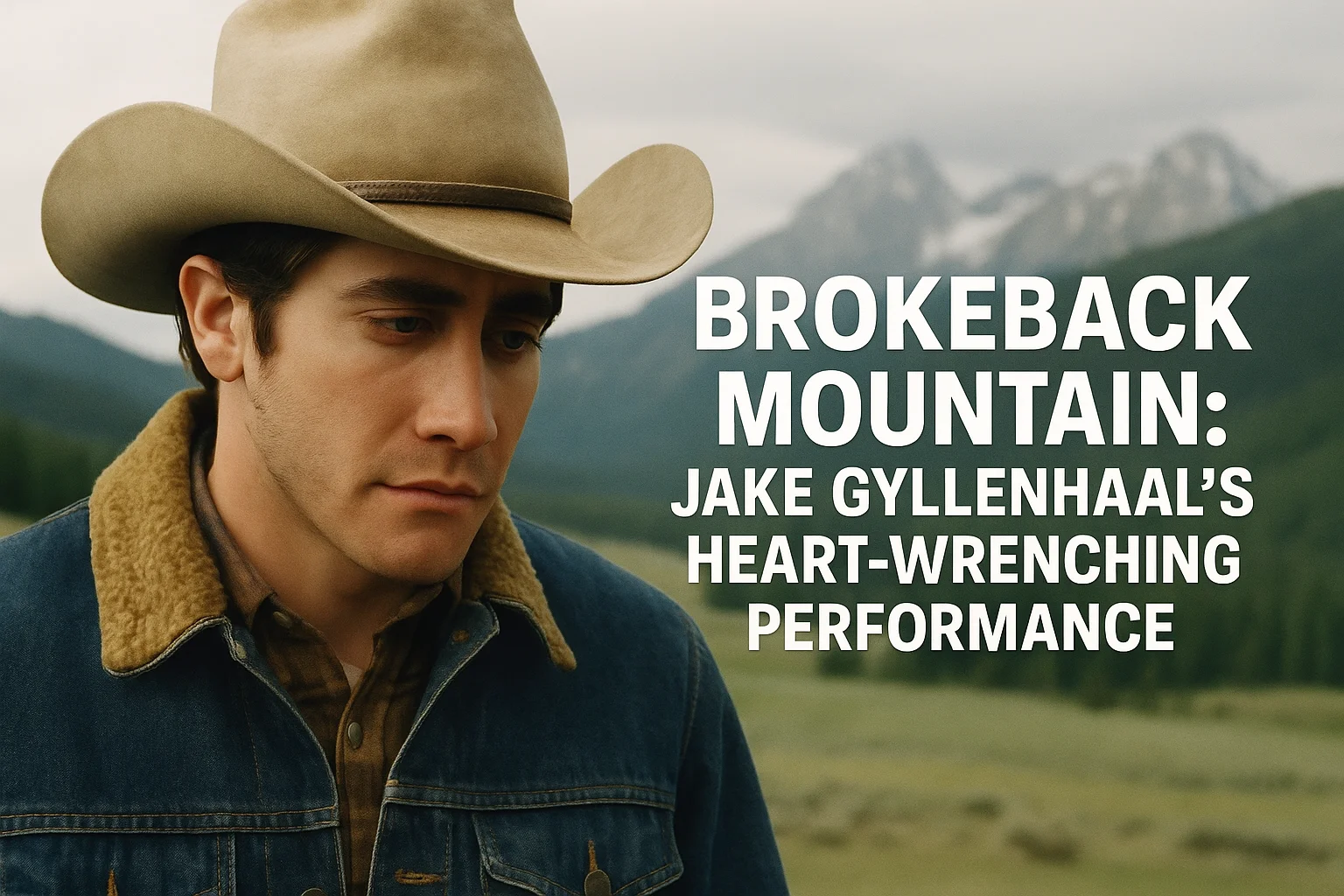
Few performances in modern cinema carry the emotional weight and cultural impact of Jake Gyllenhaal’s portrayal of Jack Twist in Brokeback Mountain (2005). Directed by Ang Lee, this groundbreaking film told the story of two cowboys who develop a complex, romantic relationship in the American West. Gyllenhaal’s performance, paired with Heath Ledger’s unforgettable turn as Ennis Del Mar, brought raw vulnerability and authenticity to a narrative that was both intimate and universal.
For Gyllenhaal, Brokeback Mountain was more than just another role; it became a defining moment in his career and a milestone in LGBTQ+ representation in Hollywood. To truly understand why his performance is considered heart-wrenching, it’s essential to explore his acting choices, the film’s cultural context, and its lasting legacy.
Jake Gyllenhaal as Jack Twist: Vulnerability in a Rugged World
Jack Twist is a rodeo cowboy with dreams bigger than his surroundings. Unlike Ennis, who is guarded and emotionally restrained, Jack openly craves connection, intimacy, and a future that society around him refuses to accept.
Gyllenhaal brought to Jack a delicate balance: he is charming and hopeful, yet aching with frustration. His longing glances, small gestures, and moments of suppressed pain reveal a man caught between love and societal rejection. This emotional accessibility contrasts with Ledger’s more stoic portrayal of Ennis, creating a dynamic that makes their relationship deeply compelling.
The Power of Non-Verbal Acting
Much like Ryan Gosling (whom you blogged about earlier), Jake Gyllenhaal proves that silence and subtlety can be more powerful than dialogue. In Brokeback Mountain, many of Jack’s most moving scenes rely on body language:
- A lingering touch that communicates affection he cannot verbalize.
- A pained look as Ennis repeatedly rejects the idea of building a life together.
- Quiet moments of solitude that reveal Jack’s inner conflict.
These non-verbal cues magnify the tragedy, showing us the depth of his yearning without needing words.
Chemistry with Heath Ledger: A Perfect Counterbalance
Gyllenhaal’s performance cannot be fully appreciated without acknowledging his on-screen chemistry with Heath Ledger. Ledger’s Ennis is emotionally barricaded, embodying repression and fear, while Gyllenhaal’s Jack is expressive, open, and determined to fight for love.
This contrast is the heartbeat of the film. Gyllenhaal’s Jack challenges Ennis to imagine a life outside societal boundaries. The heartbreak comes from knowing Jack is willing to risk everything, but Ennis cannot overcome his fear. The push-and-pull between the two actors created some of the most emotionally devastating moments in cinematic history.
The “I Wish I Knew How to Quit You” Scene
Perhaps the most quoted line in Brokeback Mountain, Jack’s desperate cry, “I wish I knew how to quit you!” has become symbolic of the film’s raw emotional intensity. Gyllenhaal delivered it not as melodrama, but as a breaking point of years of repression, longing, and pain.
The scene encapsulates the central tragedy: love that is powerful, undeniable, yet painfully unsustainable in the face of fear and societal judgment. It is the kind of cinematic moment that defines an actor’s career, and for Gyllenhaal, it cemented him as one of the greatest actors of his generation.
Breaking Hollywood Stereotypes
In 2005, Brokeback Mountain was not just a film; it was a cultural event. Mainstream Hollywood had rarely portrayed same-sex love with such intimacy and seriousness. For Gyllenhaal, taking on the role of Jack Twist was a bold career move, especially at a time when typecasting and stigma were real risks for actors.
Instead of limiting him, however, the role elevated him. Gyllenhaal’s performance was celebrated for its bravery, emotional depth, and authenticity. He helped break barriers in how love stories could be told on the big screen, paving the way for more inclusive narratives.
Awards and Critical Reception
Jake Gyllenhaal’s work in Brokeback Mountain earned him widespread critical acclaim, including:
- Academy Award nomination for Best Supporting Actor.
- BAFTA Award win for Best Supporting Actor.
- Golden Globe nomination and Screen Actors Guild nomination.
Critics praised his nuanced approach, often highlighting his ability to convey Jack’s longing and despair without overplaying the role. Gyllenhaal’s performance was recognized not only as technically excellent but as emotionally transformative.
The Cultural and Emotional Legacy
Nearly two decades later, Brokeback Mountain continues to resonate. Gyllenhaal’s portrayal of Jack remains one of cinema’s most powerful examples of love and loss. The film transcended being “just” a love story; it became a mirror for audiences to reflect on issues of repression, identity, and societal acceptance.
For many, Jack Twist’s journey represents the emotional reality of countless LGBTQ+ individuals forced to choose between authenticity and survival. Gyllenhaal gave this experience a human face, gentle, hopeful, and tragically heartbroken.
Gyllenhaal’s Career After Brokeback
Far from pigeonholing him, Brokeback Mountain propelled Gyllenhaal into a wide range of roles. He went on to star in psychological thrillers (Zodiac, Nightcrawler), action blockbusters (Prince of Persia, Spider-Man: Far From Home), and intense character dramas (Prisoners, Demolition).
Yet no matter how versatile his career became, audiences and critics continue to return to Jack Twist as a defining performance. It remains a benchmark against which many of his later roles are measured.
Why Gyllenhaal’s Performance Still Matters Today
In an era when representation in media is constantly discussed, Gyllenhaal’s Jack Twist still stands out. His portrayal was not caricatured, sensationalized, or one-dimensional. Instead, it was grounded in humanity. Jack could have been anyone; his love story just happened to be with another man.
This universality is why the performance continues to resonate with audiences of all backgrounds. Love, loss, and longing are universal human experiences, and Gyllenhaal’s performance tapped into them with devastating honesty.
Lessons for Actors and Storytellers
Jake Gyllenhaal’s work in Brokeback Mountain offers valuable lessons for actors, writers, and filmmakers:
- Subtlety matters: Emotional power often comes from restraint.
- Authenticity wins: Audiences connect with truth, even in silence.
- Representation has impact: Choosing to tell marginalized stories can reshape cultural narratives.
For aspiring performers, Gyllenhaal’s Jack Twist is a masterclass in embodying vulnerability without losing strength.
A Timeless, Heart-Wrenching Performance
Jake Gyllenhaal’s portrayal of Jack Twist in Brokeback Mountain remains one of the most heart-wrenching performances in modern cinema. Through vulnerability, subtlety, and authenticity, he gave life to a character whose pain and longing transcended the screen.
The performance was not only career-defining but also culturally significant, shifting how Hollywood approached same-sex love stories. Even today, nearly two decades later, Gyllenhaal’s Jack continues to break hearts and inspire conversations about love, repression, and acceptance.
In many ways, Jake Gyllenhaal didn’t just play Jack Twist; he became a vessel for the quiet, universal tragedy of love constrained by fear, making his performance unforgettable and eternally relevant.
FAQs
Why is Jake Gyllenhaal’s performance in Brokeback Mountain considered heart-wrenching?
Because it captures raw vulnerability and longing, showing the pain of love denied by societal pressures.
Did Jake Gyllenhaal win an Oscar for Brokeback Mountain?
He was nominated for Best Supporting Actor but did not win. However, he won the BAFTA Award for his performance.
Q3: How did Brokeback Mountain impact Jake Gyllenhaal’s career?
It solidified him as one of the most versatile and respected actors of his generation, opening doors to diverse and challenging roles.
What is the most iconic scene featuring Gyllenhaal in the film?
The “I wish I knew how to quit you” scene is widely regarded as the emotional climax of his performance.
Why is Brokeback Mountain still relevant today?
It tells a timeless story of love, repression, and longing, while also representing an important milestone in LGBTQ+ visibility in mainstream cinema.