
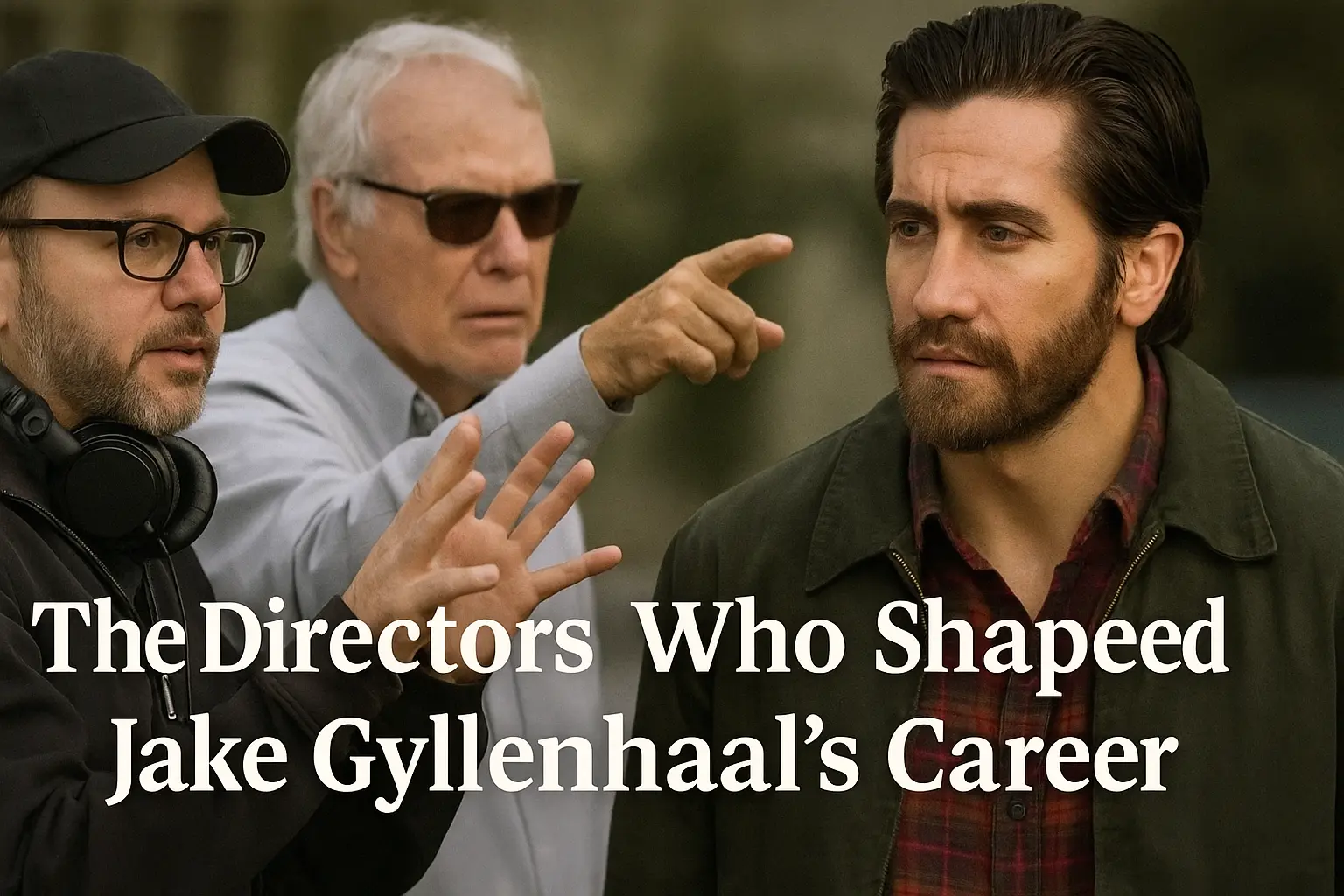
Jake Gyllenhaal has long been celebrated as one of Hollywood’s most versatile and compelling actors. From his early indie beginnings to blockbuster thrillers and prestige dramas, he has consistently delivered transformative performances that captivate audiences. But behind his success lies a group of visionary directors who recognized his talent and pushed him to new creative heights.
Gyllenhaal’s career has been shaped not only by his choices as an actor but also by the filmmakers who guided him through complex narratives and demanding characters. These collaborations have not only defined his artistic journey but also left lasting marks on modern cinema.
In this article, we’ll explore the directors who played a pivotal role in shaping Jake Gyllenhaal’s career how their influence expanded his range, refined his craft, and turned him into one of the most respected actors of his generation.
Early Collaborations: Building a Foundation
Joe Johnston – October Sky (1999)
Jake’s first significant role came under director Joe Johnston in October Sky, where he played Homer Hickam, a coal miner’s son who dreams of building rockets. Johnston guided the young Gyllenhaal to deliver a heartfelt performance that introduced him to audiences as a rising talent.
This was more than just a debut; it was a foundation. Johnston created a nurturing environment that allowed Jake’s natural sincerity and emotional intelligence to shine through qualities that would later become trademarks of his acting style.
Richard Kelly – Donnie Darko (2001)
If October Sky was Jake’s introduction, Richard Kelly’s Donnie Darko was his breakout. Kelly’s daring direction and surreal storytelling gave Gyllenhaal the platform to showcase his ability to embody complex, troubled characters.
As Donnie, Gyllenhaal balanced vulnerability, intensity, and confusion in a role that demanded depth beyond his years. Kelly’s willingness to take risks on a young actor cemented Gyllenhaal’s status as a cult favorite and established him as an actor unafraid of unconventional projects.
Ang Lee – Brokeback Mountain (2005)
Ang Lee’s masterpiece, Brokeback Mountain, remains one of the most defining films of Gyllenhaal’s career. Under Lee’s sensitive and empathetic direction, Jake delivered a performance that was both restrained and emotionally devastating as Jack Twist.
Lee’s approach emphasized authenticity and emotional truth, allowing Gyllenhaal to explore vulnerability in ways few roles had demanded before. The film’s critical success, coupled with Gyllenhaal’s Academy Award nomination, elevated him into the ranks of serious, award-worthy actors.
Ang Lee helped Jake bridge the gap between indie credibility and mainstream prestige, solidifying his place as a dramatic powerhouse.
David Fincher – Zodiac (2007)
Working with perfectionist director David Fincher pushed Gyllenhaal’s discipline to new levels. In Zodiac, Gyllenhaal played Robert Graysmith, a cartoonist obsessed with solving the Zodiac killings.
Fincher’s meticulous style known for multiple takes and razor-sharp precision challenged Gyllenhaal to refine every detail of his performance. The result was a portrayal of obsession and determination that anchored one of the most acclaimed thrillers of the 2000s.
Fincher’s influence sharpened Jake’s ability to thrive under demanding conditions and cemented his reputation as an actor willing to go the extra mile for authenticity.
Denis Villeneuve – A Transformative Partnership
One of the most important collaborations of Gyllenhaal’s career has been with director Denis Villeneuve. Together, they created some of Jake’s most haunting and layered performances.
Prisoners (2013)
As Detective Loki, Gyllenhaal delivered a riveting portrayal of a man caught in the middle of a disturbing child abduction case. Villeneuve gave him the freedom to add unique quirks like Loki’s nervous blinking and tattoos that turned the character into something unforgettable.
Enemy (2013)
Villeneuve pushed Jake even further in Enemy, a surreal psychological thriller where he played dual roles. The film required nuance, subtlety, and a deep dive into existential dread something Villeneuve trusted Jake to carry.
These collaborations not only showcased Gyllenhaal’s willingness to experiment but also solidified his status as one of the boldest actors of his generation. Villeneuve and Gyllenhaal’s artistic synergy redefined his career, aligning him with some of the best auteurs of the 21st century.
Dan Gilroy – Nightcrawler (2014)
Perhaps no role better demonstrates Gyllenhaal’s dedication than his performance in Dan Gilroy’s Nightcrawler. Playing Lou Bloom, a sociopathic cameraman chasing crime footage, Jake underwent a physical and psychological transformation.
Gilroy’s vision was to create a character that was both disturbing and captivating, and Gyllenhaal fully committed losing weight, adopting a manic energy, and immersing himself in Bloom’s unsettling worldview.
The performance earned him critical acclaim and solidified his reputation as one of the most daring actors in Hollywood. Gilroy gave Jake the chance to reinvent himself as a fearless risk-taker, willing to dive into morally ambiguous characters.
Tom Ford – Nocturnal Animals (2016)
In Tom Ford’s stylish and emotionally charged Nocturnal Animals, Gyllenhaal once again showcased his versatility. Playing dual roles Edward, a sensitive writer, and Tony, a tortured fictional character Jake navigated themes of betrayal, revenge, and heartbreak.
Ford’s meticulous and artistic direction allowed Gyllenhaal to explore contrasts between fragility and intensity. His performance was haunting, proving his ability to balance vulnerability with raw emotional power.
Cary Joji Fukunaga – Beasts of No Nation Connection & The Guilty (2021)
Though Fukunaga didn’t direct Jake until The Guilty (2021), his influence came at a pivotal moment. In the film, Gyllenhaal plays a 911 operator battling inner turmoil while handling a kidnapping case.
The one-location, dialogue-driven nature of the movie placed the entire narrative on Jake’s shoulders. Fukunaga’s sharp, tension-building style pushed Jake to rely on vocal inflection, micro-expressions, and restrained intensity showcasing his maturity as a seasoned performer.
Other Notable Collaborations
- Sam Mendes – Jarhead (2005): Mendes pushed Jake into the war genre, helping him embody a soldier’s psychological strain.
- Edward Zwick – Love & Other Drugs (2010): Zwick’s romantic drama revealed Gyllenhaal’s lighter, more charismatic side.
- Baltasar Kormákur – Everest (2015): Tested his endurance in a large-scale survival epic.
Michael Bay – Ambulance (2022): Brought him into a high-octane action setting while still highlighting his dramatic instincts.
Why These Directors Mattered
The directors who shaped Jake Gyllenhaal’s career didn’t just cast him—they challenged him. Each collaboration unlocked new aspects of his craft:
- Richard Kelly revealed his eccentric, boundary-pushing potential.
- Ang Lee nurtured his vulnerability and depth.
- David Fincher sharpened his discipline.
- Denis Villeneuve stretched his psychological range.
- Dan Gilroy unleashed his fearlessness.
- Tom Ford highlighted his elegance and fragility.
Together, they transformed Jake from a talented actor into one of the most respected and versatile performers in the industry.
Conclusion
Jake Gyllenhaal’s career is not the story of a single breakout role but of a series of transformative collaborations with directors who believed in his talent. From indie visionaries to Hollywood auteurs, these filmmakers gave him the space and challenges necessary to evolve into the multifaceted actor he is today.
In many ways, Jake’s journey proves that a great actor is only as strong as the directors who shape him. By working with some of the boldest storytellers of his generation, Gyllenhaal has carved out a career defined by risk-taking, emotional truth, and artistic excellence.
FAQs
Which director gave Jake Gyllenhaal his breakout role?
Richard Kelly, with Donnie Darko, provided Jake with the role that established him as a cult-favorite actor.
Which director earned Jake his first Oscar nomination?
Ang Lee, for Brokeback Mountain, earned Gyllenhaal an Academy Award nomination for Best Supporting Actor.
What is Jake Gyllenhaal’s most transformative collaboration?
His work with Denis Villeneuve (Prisoners and Enemy) and Dan Gilroy (Nightcrawler) is often considered career-defining.
Has Jake Gyllenhaal worked with action directors?
Yes. He has collaborated with Michael Bay (Ambulance) and Sam Mendes (Jarhead), among others.
Why is Jake Gyllenhaal considered a director’s actor?
Because he thrives under challenging, visionary direction, bringing depth, risk, and authenticity to every role.