
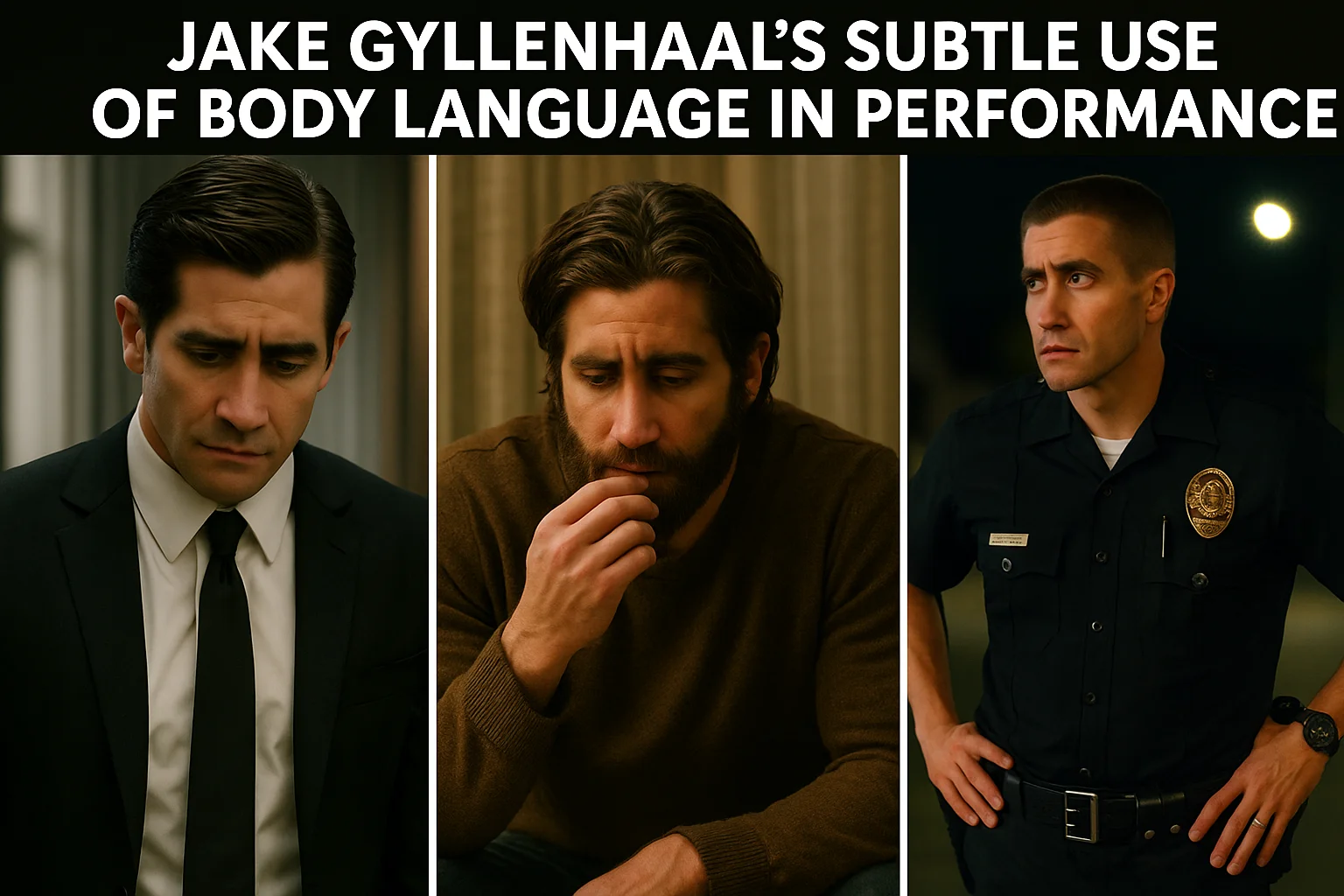
Jake Gyllenhaal is one of Hollywood’s most versatile and respected actors, known not just for his choice of bold, complex roles but also for the emotional precision with which he performs. While many actors rely heavily on dialogue, Gyllenhaal often uses subtle body language, gestures, posture, and micro-expressions to communicate the inner world of his characters.
His ability to let the smallest physical detail speak volumes has become a hallmark of his craft. From the restrained tension of Nightcrawler to the simmering anguish in Prisoners, and the physical transformation in Southpaw, Gyllenhaal proves that acting is as much about silence and movement as it is about words.
This blog takes a deep dive into how Jake Gyllenhaal uses body language to elevate his performances, why it resonates so strongly with audiences, and how it cements his place as one of the most compelling actors of his generation.
The Importance of Body Language in Acting
Before exploring Gyllenhaal’s work, it’s essential to understand why body language is so vital in acting:
- Non-verbal cues often communicate emotions more authentically than dialogue.
- Physicality helps define a character’s background, emotional state, and intentions.
- Subtle changes in posture, facial tension, or eye movement can shift how audiences interpret a scene.
Great actors like Daniel Day-Lewis, Meryl Streep, and Joaquin Phoenix are masters of using the body as an expressive tool. Jake Gyllenhaal belongs in this group, consistently proving that less can be more.
Early Signs of Gyllenhaal’s Physical Subtlety
Even in his early work, Gyllenhaal displayed a strong command of physical nuance:
- October Sky (1999): As Homer Hickam, a young man inspired to become a rocket scientist, Gyllenhaal’s nervous energy, hunched posture, and fidgeting movements reflected a boy yearning to break free from small-town expectations.
- Donnie Darko (2001): Playing the troubled and hallucinating teenager, Gyllenhaal relied on twitchy gestures, tilted head movements, and piercing stares to build Donnie’s unsettling presence.
These early roles showed his instinct to use physical subtleties to deepen character work, foreshadowing the actor he would become.
Nightcrawler: The Power of Restraint
Perhaps the most striking example of Gyllenhaal’s physical acting is Louis Bloom in Nightcrawler (2014).
- Posture and weight: Gyllenhaal lost weight for the role, making his frame lean and almost predatory. His hunched shoulders and forward-leaning gait made him resemble a hungry coyote.
- Eye contact: Bloom rarely blinks, and his wide-eyed stares communicate both obsession and menace.
- Gestures: Instead of large movements, Gyllenhaal uses controlled, robotic hand gestures that reflect Bloom’s calculated personality.
Through these choices, Gyllenhaal transformed Louis Bloom into one of the most unnerving characters in recent cinema without ever resorting to over-the-top theatrics.
Prisoners: Internalized Anguish Through Micro-Movements
In Denis Villeneuve’s Prisoners (2013), Gyllenhaal plays Detective Loki, a character defined by discipline and simmering frustration.
- Tics and blinking: Loki’s frequent blinking and nervous eye twitches suggest stress and bottled-up trauma, adding hidden layers to his backstory without needing exposition.
- Stillness: Unlike Bloom’s animalistic energy, Loki often sits still, folding his hands or resting his chin, signaling calm but also inner turbulence.
- Physical contrasts: His upright posture in interrogations versus slouched, exhausted body language in private moments reflect the dual pressures of duty and humanity.
Gyllenhaal’s performance demonstrates how physical choices can make a character’s inner life visible without explicit dialogue.
Southpaw: Transforming the Body as Character
For Southpaw (2015), Gyllenhaal underwent one of his most dramatic physical transformations.
- Physique: He trained like a professional boxer, adding muscle mass and perfecting authentic ring movement. His body itself became part of the narrative.
- Movement style: His aggressive, lunging boxing style communicated Billy Hope’s anger and desperation.
- Post-fight body language: Outside the ring, his slouched shoulders and heavy gait reflected grief, exhaustion, and brokenness.
By reshaping his body and movement patterns, Gyllenhaal showed how an actor’s physical commitment can elevate storytelling.
Brokeback Mountain: Quiet Vulnerability
In Brokeback Mountain (2005), Gyllenhaal’s portrayal of Jack Twist relies on gentle, restrained physicality to communicate forbidden love and vulnerability.
- Touch and distance: Jack often reaches toward Ennis (Heath Ledger) with tentative gestures, reflecting longing and fear.
- Facial subtleties: His soft smiles, hesitant glances, and eye drops convey deep emotions without melodrama.
- Posture shifts: Jack’s body alternates between relaxed warmth in private moments and guarded rigidity in public, symbolizing repression.
This role demonstrates how body language can be a tool of intimacy, speaking louder than words in conveying love and pain
The Eyes as a Window
Gyllenhaal is particularly renowned for his expressive eyes, which he uses as a key instrument in performances.
- Wide-eyed stares: In Nightcrawler, they communicate obsession and sociopathy.
- Blinking tics: In Prisoners, they show suppressed trauma.
- Soft focus: In Brokeback Mountain, his eyes hold tenderness and heartbreak.
- Controlled intensity: In Enemy (2013), his dual role required subtle eye shifts to distinguish two characters.
His mastery of eye-based body language makes even silent moments compelling.
Comparing Gyllenhaal to His Peers
What separates Gyllenhaal from other actors is his balance of subtlety and commitment. While actors like Christian Bale or Daniel Day-Lewis are known for dramatic physical transformations, Gyllenhaal often opts for smaller, understated choices that resonate deeply. His style emphasizes the psychological realism of characters over surface-level dramatics.
Impact on Modern Acting
Jake Gyllenhaal’s reliance on body language has influenced both audience expectations and industry standards:
- Directors often praise his ability to communicate without dialogue.
- Younger actors study his performances as examples of minimalism in acting.
- His style fits well with today’s demand for naturalistic, grounded performances in film.
By mastering non-verbal storytelling, Gyllenhaal has helped redefine what it means to deliver a powerful cinematic performance.
Conclusion
Jake Gyllenhaal’s subtle use of body language is a defining feature of his craft. Whether it’s a lingering glance, a shift in posture, or a nervous tic, his physical choices bring complexity and humanity to his characters.
By combining vulnerability, intensity, and restraint, Gyllenhaal has become a master of non-verbal storytelling. His performances remind us that in acting, silence and stillness can be just as powerful as words sometimes even more so.
His continued exploration of physical expression ensures that Jake Gyllenhaal will remain not only one of the most respected actors of his generation but also a blueprint for future performers who want to master the art of subtlety.
FAQs
What makes Jake Gyllenhaal unique as an actor?
His ability to use subtle body language, micro-expressions, and physical transformations allows him to convey deep emotions without relying heavily on dialogue.
Which film best showcases Gyllenhaal’s body language?
Nightcrawler is often cited as his most striking use of physical acting, but Prisoners and Brokeback Mountain also highlight his subtlety.
Does Gyllenhaal use method acting to master body language?
Yes. Gyllenhaal often immerses himself in method acting, studying real people and adopting physical habits that make his characters authentic.
How does Jake Gyllenhaal prepare for physically demanding roles?
For roles like Southpaw, he undergoes rigorous training and even lives like his characters to authentically embody their physicality.
Why is body language important in Jake Gyllenhaal’s performances?
Because it allows him to add psychological depth and communicate emotions that words alone cannot, making his performances resonate more deeply with audiences.