
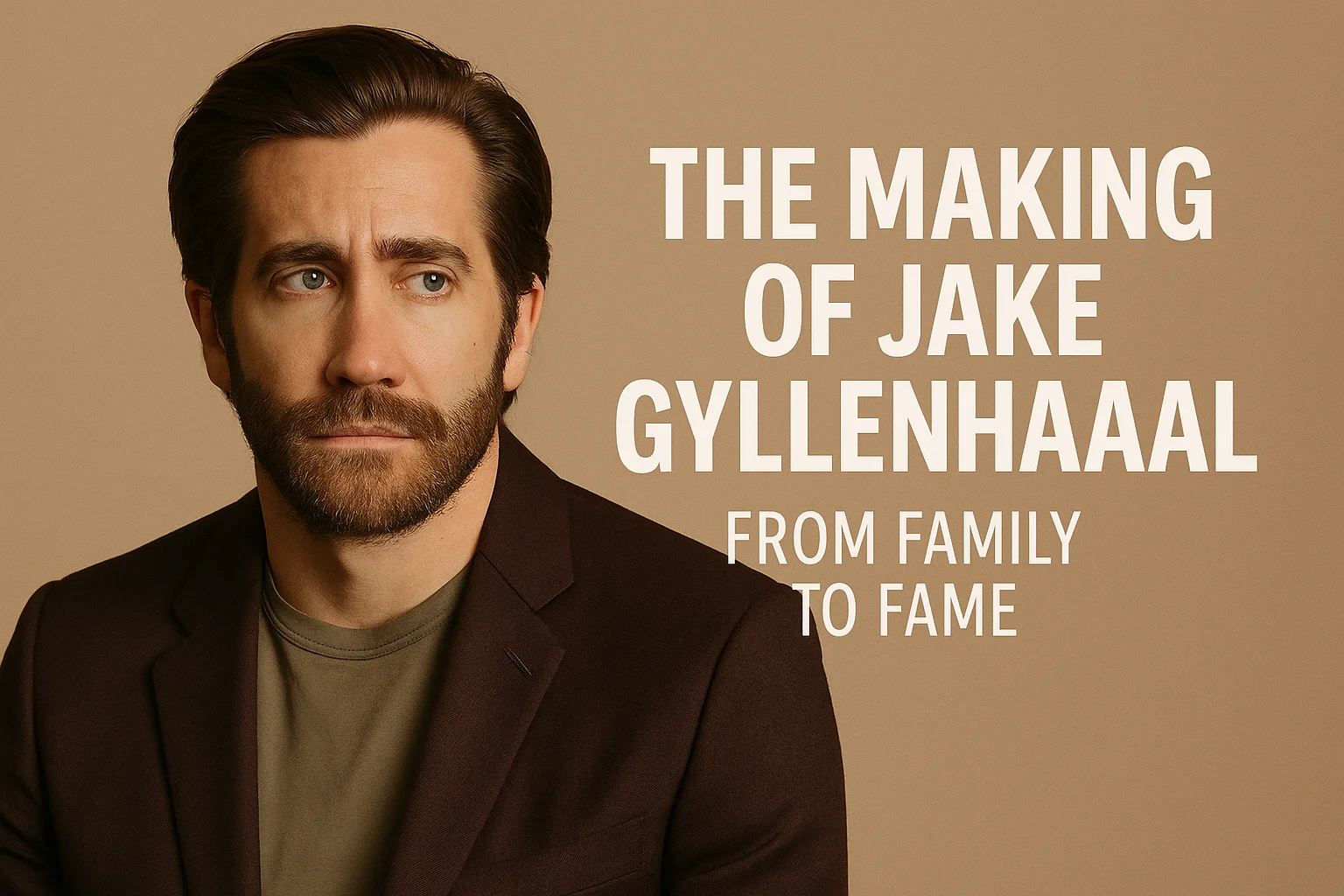
Jake Gyllenhaal’s journey from a Hollywood household to becoming one of the most respected actors of his generation is a story of talent, legacy, and intentional growth.
Born into a family deeply rooted in the film industry, his father, Stephen Gyllenhaal, a director, and his mother, Naomi Foner, an Oscar-nominated screenwriter, Jake was surrounded by storytelling from an early age. Unlike many who stumble into fame, Jake’s rise was shaped by a conscious decision to embrace challenging roles, avoid the spotlight when necessary, and prioritize artistic integrity over fame.
With breakthrough performances in cult classics like Donnie Darko and critically acclaimed roles in Brokeback Mountain and Nightcrawler, Gyllenhaal established himself as a transformative actor. His career reflects not just inherited opportunity, but a deep personal commitment to craft, emotion, and evolution.
From his early childhood in Los Angeles to commanding Broadway stages and major film sets, Jake’s story is one of legacy transformed into individual greatness
Early Life and Family Legacy
Jake Gyllenhaal’s early life was defined by both privilege and pressure. Born into a family where storytelling was the norm, he grew up immersed in the language of film and creativity. Raised in Los Angeles, his upbringing wasn’t the average childhood it was one filled with conversations about scripts, camera angles, and character development.
But rather than simply inheriting success, Jake was shaped by a family that valued substance over spotlight. His roots laid the foundation for a career that would prioritize depth, artistic challenge, and emotional authenticity.
The Gyllexnhaal Lineage in Hollywood
The Gyllenhaals are not newcomers to Hollywood. Their family history in the entertainment industry spans multiple generations, blending Scandinavian aristocracy with American cinematic tradition. Jake and his sister, Maggie Gyllenhaal, represent the latest chapter in a long-standing creative lineage.
But their presence in the spotlight isn’t just a product of their name, it’s the result of a household that fostered critical thinking, creativity, and a genuine love for performance.
Stephen Gyllenhaal’s Directorial Influence
Stephen Gyllenhaal, Jake’s father, made a name for himself as a thoughtful and politically aware director. His work in television and independent cinema gave Jake early exposure to the mechanics of filmmaking not just as entertainment, but as a tool for social commentary. From set visits to dinner table discussions, Stephen’s influence instilled in Jake a respect for storytelling and a curiosity about the world that would later define his acting style.
Naomi Foner’s Screenwriting Legacy
Naomi Foner, Jake’s mother, is an award-nominated screenwriter whose narratives often explore human complexity and emotional nuance. Her success in a male-dominated industry served as both inspiration and example.
Naomi’s emphasis on character-driven stories helped shape Jake’s sensitivity as an actor. Her guidance wasn’t limited to career advice; it was foundational in teaching him how to read between the lines, understand motivation, and portray deeply human experiences on screen.
Growing Up in Los Angeles
Growing up in Los Angeles meant Jake Gyllenhaal was never far from the epicenter of the entertainment industry. But unlike many child actors, his upbringing wasn’t driven by commercial auditions or fame-seeking.
Instead, Jake was raised in a home that valued artistic expression, critical thinking, and emotional authenticity. Surrounded by creative directors, writers, and actors, he absorbed the language of cinema early on.
His childhood was filled with film sets, script readings, and behind-the-scenes learning that would later give him a unique edge as an actor deeply rooted in the craft rather than celebrity.
Early Exposure to Filmmaking and Theater
Jake’s parents made a deliberate choice to introduce him to the arts from a young age, but without forcing him into the spotlight. His early experiences included:
- Visiting his father’s film sets and observing the production process firsthand
- Attending rehearsals and performances at local theaters
- Participating in school plays and receiving early-stage coaching
- Watching and analyzing classic films with his family
These moments weren’t just activities; they were foundational lessons in visual storytelling, emotional range, and creative discipline.
The Impact of an Artistic Household
Being raised in an artistic household had a profound effect on Jake’s worldview. Creativity wasn’t an occasional exercise; it was part of daily life. Key influences included:
- A culture of open expression: Emotions and ideas were discussed freely, nurturing his emotional intelligence.
- Storytelling as tradition: Whether through film, literature, or real-life experiences, stories were central to how the family communicated.
- Exposure to diverse perspectives: Through his parents’ industry connections, Jake interacted with actors, directors, and writers from varied backgrounds, expanding his creative awareness.
This environment shaped Jake not only as an actor but also as a thinker with a deep appreciation for narrative complexity.
Sibling Bond with Maggie Gyllenhaal
Jake’s relationship with his older sister, Maggie Gyllenhaal, has played a defining role in his personal and professional life. More than siblings, they are creative allies who understand the demands and nuances of their shared industry. Their dynamic is rooted in mutual respect, artistic curiosity, and a shared sense of purpose. Both have carved unique paths, yet they often find common ground in their dedication to meaningful storytelling.
Shared Projects and Collaborations
Jake and Maggie have worked together on several occasions, blending their talents and chemistry on screen. Notable collaborations include:
- “Donnie Darko” (2001): Maggie played Jake’s sister both on and off screen, adding authenticity to the film’s sibling dynamic.
- Joint appearances at festivals and panels: Their shared interviews often reveal deep insights into their creative processes.
- Mutual support for each other’s projects: Whether behind the scenes or on the red carpet, their bond transcends competition.
These moments showcase their ability to enhance each other’s performances and maintain a supportive sibling relationship in a competitive industry.
Individual Career Paths and Styles
Though they share a surname and passion for the arts, Jake and Maggie have taken distinct approaches to their careers:
- Jake Gyllenhaal: Known for intense, psychologically complex roles in films like Nightcrawler and Prisoners, often working with visionary directors.
- Maggie Gyllenhaal: Celebrated for her nuanced, often unconventional characters in indie films, and more recently for her transition into directing (The Lost Daughter).
- Jake leans toward transformation: physically and emotionally immersing himself in roles.
- Maggie embraces subtlety: often choosing roles that explore inner conflict and societal norms.
Their differences reflect a shared commitment to depth and authenticity expressed in complementary, but unique, ways.
The Breakthrough Years in Film
Jake Gyllenhaal’s transition from a young actor with industry roots to a breakout star didn’t follow a predictable path. Instead of choosing high-profile blockbusters or formulaic teen movies, he took on roles that challenged norms and highlighted his emotional depth. His early 2000s performances showed a maturity well beyond his years and positioned him as one of the most versatile talents of his generation.
Donnie Darko and the Rise of a Cult Icon
When Donnie Darko was released in 2001, it didn’t immediately find mainstream success. But over time, it became a cultural touchstone and Jake Gyllenhaal’s portrayal of the troubled teenager turned him into a cult icon. His performance resonated with audiences who were drawn to the film’s emotional weight, philosophical depth, and surreal storytelling.
Critical Reception and Fan Following
Although Donnie Darko underperformed at the box office initially, critics praised Jake’s performance as emotionally layered and deeply empathetic. Over the years, the film developed a passionate fan base, with Jake becoming the face of one of the most iconic characters in indie cinema. Highlights include:
- Consistent inclusion in “Best Cult Films” lists
- Fan theories and forums are still active more than two decades later
- Recognition for portraying mental health issues with nuance and sensitivity
Role Complexity and Performance Depth
As Donnie, Jake had to navigate psychological trauma, time travel paradoxes, and emotional vulnerability all at just 20 years old. This role demanded:
- A mix of intensity, confusion, and introspection
- Subtle physical cues and non-verbal storytelling
- Emotional maturity to portray existential angst without exaggeration
His work in Donnie Darko set a high standard early in his career, proving he could handle roles with intellectual and emotional complexity.
Transitioning from Teen Roles to Mature Characters
Following the success of Donnie Darko, Jake didn’t settle into typical Hollywood fame. Instead, he continued choosing roles that showed growth and range, slowly stepping away from his image as a teen actor. Films like Moonlight Mile and The Good Girl marked a shift toward more adult, emotionally rich characters.
Notable Roles in Moonlight Mile and The Good Girl
- Moonlight Mile (2002): Jake played a young man grieving the loss of his fiancée, showcasing raw emotion and emotional restraint.
- The Good Girl (2002): Opposite Jennifer Aniston, he portrayed a disillusioned store clerk in a bleak small-town drama further proving his ability to carry off-center, complex roles.
These films solidified Jake’s presence in the independent film scene and proved he was more than a one-role wonder.
Choosing Unconventional Scripts
Rather than following the traditional heartthrob trajectory, Jake sought out projects that were often darker, quirkier, or more emotionally intense. His approach included:
- Favoring character-driven narratives over action-packed blockbusters
- Working with directors known for depth and subtlety
- Selecting roles that explored grief, identity, and mental instability
This willingness to take creative risks set him apart in an industry often dominated by typecasting.
Awards and Industry Recognition
Jake’s early choices and compelling performances soon began to attract formal recognition. While he didn’t immediately secure major awards, his presence was felt across red carpets and critics’ lists, paving the way for long-term industry credibility.
First Nominations and Red Carpet Buzz
His breakout into mainstream awards conversations began with films like:
- Brokeback Mountain (2005): Earned him an Academy Award nomination for Best Supporting Actor
- Critics’ Choice and BAFTA recognition for emotionally charged roles
- First major appearances at Cannes and Venice, where his performances drew serious attention
These nominations validated his choices and gave him a reputation for substance over celebrity.
Rising Profile in Film Festivals
Jake became a recurring figure in the international film festival circuit. His presence at events such as:
- Sundance Film Festival (a launchpad for indie stars)
- Toronto International Film Festival (TIFF)
- Venice and Cannes Film Festivals
…allowed him to showcase daring, character-driven roles to a global audience. Festivals helped reinforce his image as a serious actor committed to artful storytelling over commercial formulas.
Expanding the Acting Range
As Jake Gyllenhaal’s career progressed, he deliberately pushed past the boundaries of traditional leading-man roles. Rather than being defined by genre or image, he gravitated toward characters with complexity, emotional tension, and often moral ambiguity. His choices reflected a desire to grow as an artist not just to entertain, but to disturb, challenge, and provoke thought.
Taking on Darker, Complex Roles
Jake’s evolution as an actor became most visible when he began accepting roles that demanded emotional intensity and psychological risk. These characters often walked the edge of social norms, requiring not just performance, but full psychological immersion.
Nightcrawler and the Transformation Process
Nightcrawler (2014) marked a turning point in Gyllenhaal’s career. To portray Lou Bloom, a morally hollow freelance crime videographer, Jake underwent a drastic physical and emotional transformation. Key aspects of this process included:
- Losing nearly 30 pounds reflects Lou’s obsessive drive and hunger
- Studying the behavior of sociopaths and media-obsessed culture
- Participating in night shoots around Los Angeles to absorb the city’s nocturnal rhythm
The result was a chilling, unflinching performance that shocked audiences and critics alike.
The Psychological Depth of Lou Bloom
Lou Bloom wasn’t just a disturbing character; he was a mirror of ambition gone unchecked. Jake’s performance captured:
- Emotional detachment: Lou’s lack of empathy made him both fascinating and terrifying
- Verbal precision: A calculated use of language and rhythm to manipulate others
- Internal darkness: Minimal facial expressions paired with intense eyes revealed a man with no moral center
This role earned him numerous nominations and is widely regarded as one of the most compelling performances of his generation.
Collaborations with Auteur Directors
Jake’s interest in layered characters naturally led him to work with visionary filmmakers who valued psychological depth and creative risk. These directors pushed him to new levels of performance.
Working with Denis Villeneuve and Dan Gilroy
- Denis Villeneuve: Collaborated on Prisoners and Enemy, both of which explored themes of identity, loss, and moral ambiguity. Villeneuve praised Jake for his intuition and ability to convey inner turmoil without dialogue.
- Dan Gilroy: As the writer-director of Nightcrawler, Gilroy gave Jake a role that redefined his public persona. Their partnership thrived on creative freedom and shared storytelling instincts.
These collaborations were grounded in trust and a shared desire to craft complex narratives that challenged audiences.
Role Preparation and Method Acting
Gyllenhaal’s approach to acting borders on method he often immerses himself physically, emotionally, and mentally in a role. His preparation typically includes:
- Extensive research on professions, behaviors, and psychology
- Physical transformation: gaining or losing weight, altering sleep schedules, changing posture, and movement
- Emotional memory work and isolation to build authentic character motivation
This dedication allows him to deliver performances that feel unsettlingly real, especially in emotionally charged or morally ambiguous roles.
Theatre Return to Broadway
Despite his success in film, Jake returned to the stage to reconnect with live performance a medium that demands immediacy and vulnerability. His move to theater showed his dedication to pure acting, stripped of film’s cinematic enhancements.
Broadway Debut and Critical Acclaim
Jake made his Broadway debut in 2014 with Constellations, a two-person play that required extreme emotional range and tight chemistry with his co-star. The response was overwhelmingly positive:
- Critics praised his control, nuance, and live presence
- Theater reviewers noted his “natural stage command” and “emotional elasticity”
- The production reinforced his reputation as a fearless and disciplined performer
He later starred in Sunday in the Park with George, further proving his versatility by taking on a musical role.
Balancing Stage and Screen Careers
While many film actors struggle with the transition to the stage, Jake has managed to balance both worlds successfully. His key strategies include:
- Choosing limited-run, high-quality productions that allow him to fully commit without overextending
- Using theater to refine emotional timing and improvisational awareness
- Bringing lessons from live performance, presence, pacing, and immediacy back to his film work
His ability to move between mediums keeps his performances fresh and his audience engaged across formats.
Personal Life and Media Attention
Beyond his professional achievements, Jake Gyllenhaal’s personal life has consistently attracted media attention. Unlike many of his peers, Jake has maintained a relatively private and grounded public image. He has managed to strike a delicate balance between engaging with fans and preserving his boundaries. As a result, his reputation remains centered around his work, not his drama though the media continues to spotlight his relationships, public appearances, and lifestyle.
Navigating Fame in the Public Eye
Jake Gyllenhaal grew up in the shadow of celebrity, yet he’s remained remarkably composed under its weight. Navigating fame, especially in the era of digital tabloids and social media, hasn’t been easy, but Jake has developed a public image rooted in authenticity, not sensationalism.
Privacy vs Public Perception
Jake is known for being fiercely private when it comes to his personal life. Over the years, he has:
- Avoided social media platforms, maintaining a minimal digital presence
- Rarely commented on personal relationships or rumors
- Allowed his performances to speak louder than his personal choices
Despite this, the public’s curiosity often clashes with his need for privacy, creating a narrative that walks the line between intrigue and respect.
Relationships and Media Narratives
Jake’s high-profile relationships, particularly in the early 2000s, made him a recurring figure in entertainment news. Some key points include:
- Past relationships with actresses like Kirsten Dunst, Reese Witherspoon, and singer Taylor Swift
- The media’s tendency to reduce his image to romantic headlines, especially after Swift’s “All Too Well” was speculated to be about him
- His continued refusal to sensationalize or respond to gossip, reinforcing his desire for a life outside the tabloids
While these narratives sometimes overshadow his work, Jake has consistently maintained a professional and graceful stance.
Charities and Humanitarian Work
Jake supports numerous charitable organizations and nonprofit causes, often focusing on:
- Mental health awareness and emotional wellbeing
- Education and youth development programs
- Environmental sustainability initiatives
He’s worked with groups like New Eyes for the Needy, the Anti-Recidivism Coalition, and Stand Up to Cancer, using his platform to support long-term change.
Advocacy Beyond Acting
Jake’s advocacy extends into the way he selects roles and uses interviews to spotlight critical issues. Notable advocacy elements include:
- Choosing films that address social or psychological themes (e.g., Stronger, Demolition, Prisoners)
- Speaking out about toxic masculinity, emotional vulnerability in men, and the importance of therapy
- Supporting political campaigns and participating in public service messages
Rather than separating art from activism, Jake often merges the two, giving his work deeper purpose.
The Gyllenhaal Brand in Popular Culture
Whether intentionally or not, Jake Gyllenhaal has become a cultural figure far beyond the movie screen. His expressions, interviews, and film roles have made him a staple in internet culture, fueling memes, music references, and fan adoration.
Memes, Music References, and Fan Culture
Jake’s image has been widely embraced and playfully dissected online. Highlights include:
- Viral memes based on scenes from Nightcrawler, Brokeback Mountain, and his intense interviews
- His connection to Taylor Swift’s fan base, especially surrounding the song “All Too Well.”
- Fan edits, tribute pages, and TikToks highlighting his range, attractiveness, and humor
He’s become part of the digital celebrity ecosystem without even trying to cultivate that space.
Influence on Younger Actors and Fans
Jake Gyllenhaal is often cited as an inspiration by rising actors who admire his:
- Dedication to craft over fame
- Thoughtful selection of roles
- Ability to shift between indie films, blockbusters, and theater
To many young performers and cinephiles, he represents a modern acting archetype, one who balances vulnerability, intensity, and long-term credibility in an ever-changing industry.
Recent Projects and Legacy Building
As Jake Gyllenhaal enters a new phase in his career, he’s increasingly focused on roles and projects that reflect both his maturity as an actor and his influence in shaping the entertainment landscape. No longer just a performer, he now wears multiple hats: actor, producer, creative collaborator, making intentional choices that contribute to his long-term legacy in Hollywood.
Modern Roles in the Streaming Era
In recent years, Gyllenhaal has embraced the rise of digital platforms and streaming services, showing his adaptability in an industry undergoing major change.
Netflix films and digital-first releases
Gyllenhaal has been part of major Netflix productions like Velvet Buzzsaw and The Guilty. These roles allowed him to reach wider audiences beyond the traditional theatrical model, demonstrating his relevance in the era of on-demand content. By choosing bold, unconventional stories tailored for digital platforms, he has stayed ahead of industry trends and reached younger, globally distributed viewers.
Adaptation to new audience dynamics
Streaming services have changed how stories are told, consumed, and judged. Gyllenhaal’s performances in streaming films reflect a strong understanding of this shift. He chooses narratives that are emotionally immediate and performance-driven, ideal for intimate at-home viewing. This adaptation signals his ability to connect with modern audiences without compromising his artistic integrity.
Producing and Creative Direction
Beyond acting, Gyllenhaal has stepped into roles behind the camera, becoming a producer and creative visionary on many of his recent projects.
Behind-the-scenes contributions
He has co-produced films such as Stronger and The Guilty, shaping scripts, casting decisions, and overall creative tone. These contributions show his commitment to storytelling from a broader perspective not just as an actor, but as a cinematic architect. This also gives him more control over the type of narratives he helps bring to life.
Career evolution beyond acting
This shift into producing reflects a natural evolution in Gyllenhaal’s career. As he matures in the industry, he’s using his experience to elevate new voices, create risk-taking films, and influence the industry’s creative direction. This transition also positions him as a leader among his generation of actors, much like peers who have moved into directing or founded their own production companies.
Legacy in Hollywood
Gyllenhaal’s journey has always been more than box office numbers; it’s about building a meaningful, lasting impact in the film world.
Influence on future generations
Younger actors often cite him as a model of artistic seriousness and role versatility. His choices, eschewing blockbuster typecasting in favor of layered, psychological roles have inspired emerging talent to prioritize storytelling over stardom. He’s become a benchmark for the “actor’s actor,” someone who treats the profession with both humility and mastery.
Critical retrospectives and documentaries
As his body of work grows, critics and filmmakers alike are beginning to explore his career in retrospectives and long-form discussions. Documentaries and essays highlight his evolution from teen actor to genre-defining performer. These reflections are solidifying his place as one of the most respected and influential figures of his era.
Conclusion
Jake Gyllenhaal’s journey in Hollywood is more than a successful acting career it’s a case study in how to evolve, adapt, and endure. From early promise to global recognition, he’s consistently demonstrated a rare combination of talent, discipline, and instinct. His career is not defined by fame alone but by the quality, diversity, and impact of the stories he chooses to tell.
Balancing Depth, Versatility, and Longevity
Gyllenhaal’s enduring appeal lies in his ability to balance complex character work with broad appeal. He doesn’t chase trends he anticipates them. Whether he’s diving into dark, psychologically layered roles or lighter, more commercial fare, his commitment remains the same: to make each performance honest, immersive, and unforgettable.
Career resilience through changing trends
Over the years, Gyllenhaal has weathered industry shifts from the rise of indie cinema in the 2000s to today’s streaming revolution. Unlike many actors who fade as trends change, he has stayed relevant by evolving with the times. He’s moved effortlessly between genres (drama, thriller, action, romance) and formats (cinema, streaming, theater), proving that talent grounded in substance always finds a place.
Bullet Points:
- Transitioned from indie darlings to major blockbusters seamlessly
- Embraced streaming platforms without sacrificing performance quality
- Took creative risks even when they defied market expectations
Sustaining authenticity in a commercial world
Even in a heavily commercialized industry, Gyllenhaal has maintained a grounded, authentic presence. He chooses roles that resonate with him rather than chasing box office success. This has earned him not only critical respect but also a loyal fan base who trust his artistic judgment.
Bullet Points:
- Often works with auteur directors and character-driven scripts
- Avoids social media hype, keeping the focus on his craft
- Advocates for storytelling that explores emotional and moral depth
Lessons from His Journey
Jake Gyllenhaal’s career is filled with insights for aspiring actors, creatives, and even general audiences who admire perseverance and artistry. His journey isn’t just about the movies he made; it’s about the choices, values, and influences that shaped his path. By reflecting on his story, we can draw meaningful lessons about growth, passion, and purpose.
How family, risk-taking, and timing shaped success
Jake was born into a filmmaking family, which gave him early access to industry knowledge but it didn’t guarantee success. What made the difference was his willingness to take creative risks, explore uncomfortable roles, and time his projects with the cultural moment.
Key takeaways:
- Family Influence: Growing up surrounded by cinema taught him discipline and the mechanics of good storytelling.
- Risk-Taking: From Donnie Darko to Nightcrawler, Gyllenhaal consistently chose unconventional roles that others avoided.
- Timing: He capitalized on moments when audiences were ready for deeper, more nuanced performances, never rushing but always staying present.
His career shows that talent alone isn’t enough; it’s about aligning your vision with the right moment and having the courage to pursue it.
Inspiring the next wave of performers
Beyond the screen, Jake Gyllenhaal has become a quiet mentor and symbol of what long-term artistry looks like. His career serves as a blueprint for young actors who want more than fame they want meaning.
Key ways he inspires:
- By example: Prioritizing depth over popularity has shown that critical respect often outlasts hype.
- Through consistency: His work ethic, emotional range, and grounded personality make him a role model in an often chaotic industry.
- As a collaborator, His support of new writers, directors, and stage actors underscores his dedication to lifting others.
Gyllenhaal’s journey proves that success isn’t about instant stardom; it’s about staying true to your craft, evolving with integrity, and leaving a legacy that inspires.
Why Jake Gyllenhaal’s Legacy Endures
Jake Gyllenhaal’s career is not defined by one genre, one role, or one era it’s defined by evolution. From indie cult classics to blockbuster hits, from brooding loners to romantic leads, and from stage to screen, he has continually reinvented himself without losing authenticity.
What truly makes him iconic is not just the range or the talent, but the intention behind every role, the respect for the craft, and the balance between privacy and public life. In an industry often driven by trends and algorithms, Gyllenhaal stands out as an actor and human being who still values storytelling, emotion, and artistic purpose.
His story reminds us that lasting influence doesn’t come from chasing the spotlight, but from mastering your craft, trusting your instincts, and staying grounded in who you are.
FAQs
What is Jake Gyllenhaal’s most iconic role?
While opinions vary, Donnie Darko is widely regarded as Jake’s breakthrough role, earning him a cult following. Other iconic performances include Nightcrawler, Brokeback Mountain, and Prisoners.
Is Jake Gyllenhaal from a Hollywood family?
Yes, Jake comes from a well-established Hollywood lineage. His father, Stephen Gyllenhaal, is a director, and his mother, Naomi Foner, is an Oscar-nominated screenwriter. His sister, Maggie Gyllenhaal, is also an acclaimed actress.
Has Jake Gyllenhaal done theater work?
Absolutely. Jake made a strong return to live theater with performances on Broadway, notably in Sunday in the Park with George and Sea Wall / A Life, both receiving critical acclaim.
What awards has Jake Gyllenhaal won?
Jake has received numerous nominations, including an Oscar nod for Brokeback Mountain. He has won BAFTA, National Board of Review, and Independent Spirit Awards, among others.
Is Jake Gyllenhaal involved in social causes?
Yes, Jake is known for supporting various charities and advocacy campaigns related to mental health, environmental issues, and education. He’s also a regular supporter of the ACLU and New Eyes for the Needy
Has Jake Gyllenhaal produced any films?
Yes. Jake has increasingly taken roles behind the camera as a producer, especially for streaming platforms like Netflix and Apple TV+, helping bring complex and original stories to life.
Are Jake and Maggie Gyllenhaal close?
Yes. The siblings have a strong bond and have worked together on projects like Donnie Darko. Both have praised each other’s work and continue to support one another’s careers.
Why is Jake Gyllenhaal considered a versatile actor?
His filmography spans psychological thrillers, romantic dramas, action blockbusters, and theater performances. He often chooses unconventional roles that challenge both himself and the audience.