
Introduction
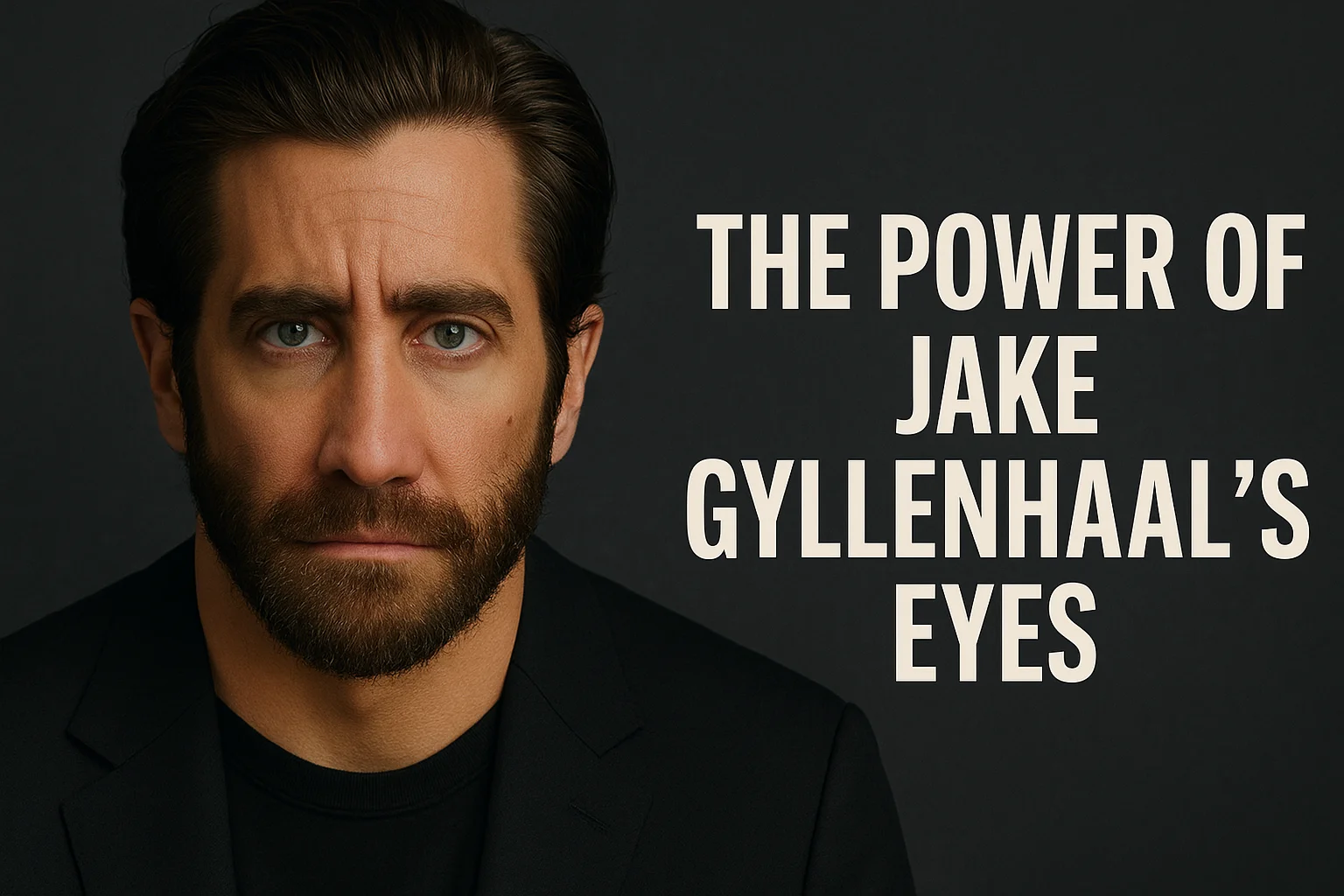
Few actors in Hollywood possess the ability to captivate audiences with just a glance, the way Jake Gyllenhaal does. His performances are not merely about dialogue delivery, physical presence, or narrative structure; they are about the unspoken communication that radiates through his eyes. Gyllenhaal’s expressive gaze has become a defining trait of his acting style, enabling him to convey raw emotion, psychological complexity, and unspoken tension without uttering a single word.
From his early work in October Sky to critically acclaimed performances in Brokeback Mountain, Prisoners, and Nightcrawler, Gyllenhaal has shown that the human eye can be the most powerful instrument in an actor’s toolkit. His eyes can reveal fear, vulnerability, rage, obsession, or tenderness often within the span of a few seconds.
This article explores how Jake Gyllenhaal uses his eyes to communicate emotion, why this technique is so effective, and how it has shaped his legacy as one of the most versatile and emotionally intelligent actors of his generation.
The Significance of Eyes in Acting
The saying “the eyes are the window to the soul” is never more relevant than in the world of acting. While facial expressions and body language are essential, the eyes carry a level of authenticity that cannot be faked. They reflect subconscious emotions and allow audiences to sense what lies beneath the surface of a character.
Actors like Al Pacino, Daniel Day-Lewis, and Meryl Streep are often praised for their ability to control micro-expressions and project emotion through their eyes. Jake Gyllenhaal belongs firmly in this tradition, but his approach is distinct: he uses his gaze not just as a reflection of feeling but as an active storytelling tool, capable of shifting the mood of an entire scene.
Early Roles: Gyllenhaal’s Subtlety in October Sky
In October Sky (1999), Gyllenhaal played Homer Hickam, a young man inspired to pursue rocket science against the odds. Even in this early role, his eyes conveyed youthful determination and wonder. His gaze in scenes where Homer stares at the stars or watches rockets launch communicates both ambition and vulnerability, showing that Gyllenhaal instinctively understood the power of nonverbal performance from the start.
Donnie Darko: Haunted Eyes of a Troubled Teen
Richard Kelly’s cult classic Donnie Darko (2001) gave Gyllenhaal his first chance to explore psychological complexity. Donnie is a troubled teenager, haunted by visions and battling inner turmoil.
- Intense Gaze: Gyllenhaal’s wide, searching eyes communicate paranoia and fragility.
- Dual Emotions: His eyes often shift from fear to curiosity, giving audiences a glimpse into Donnie’s fragmented psyche.
- Connection with Audiences: Viewers don’t just hear Donnie’s confusion they feel it through the pain and uncertainty in Gyllenhaal’s eyes.
This performance demonstrated his ability to blend innocence with darkness, making his eyes an essential storytelling device.
Brokeback Mountain: Unspoken Desire and Repression
In Brokeback Mountain (2005), Gyllenhaal delivered one of his most acclaimed performances as Jack Twist. Much of the film’s emotional weight rests not on words but on stolen glances and unspoken longing.
- Eyes as Confession: Jack’s gaze toward Ennis (Heath Ledger) conveys love, desire, and vulnerability that societal pressures forbid him to voice.
- Silent Storytelling: The emotions suppressed in dialogue emerge in the eyes, longing when they are apart, heartbreak when their relationship fractures.
- Universal Relatability: Audiences connected with Jack not just because of his words, but because his eyes revealed the truth of his hidden life.
This role proved that Gyllenhaal could carry an entire emotional narrative through his eyes alone.
Prisoners: The Watchful Eyes of Detective Loki
In Denis Villeneuve’s Prisoners (2013), Gyllenhaal played Detective Loki, tasked with solving a disturbing child abduction case. His eyes played a crucial role in shaping the character’s intensity.
- Suspicion and Focus: Loki’s piercing gaze reflects his analytical mind, always observing, questioning, and uncovering clues.
- Emotional Cracks: Despite his controlled demeanor, Gyllenhaal uses subtle eye movements to show Loki’s frustration, exhaustion, and empathy for the families involved.
- Authenticity: Even when silent, Loki’s eyes make him feel like a real detective — calculating, alert, and deeply human.
Here, Gyllenhaal demonstrated how the eyes can serve both as an investigative tool and a window into personal struggle.
Nightcrawler: The Predatory Stare of Louis Bloom
Perhaps the most famous example of Gyllenhaal’s use of eyes comes from Nightcrawler (2014). His portrayal of Louis Bloom, a sociopathic crime journalist, is chilling in large part because of his gaze.
- Unblinking Intensity: Gyllenhaal deliberately widened his eyes and maintained prolonged, unsettling stares, creating a predatory effect.
- Psychological Edge: His gaze communicates ambition, manipulation, and a lack of empathy, unsettling both the characters within the film and the audience watching it.
- Transformation Through Eyes: By altering the rhythm of his blinking and controlling his gaze, Gyllenhaal made Louis Bloom one of the most memorable villains of the decade.
This performance highlighted how the manipulation of the eyes can completely redefine a character, making them magnetic and terrifying at once.
Stronger: Conveying Trauma Through the Eyes
In Stronger (2017), Gyllenhaal played Jeff Bauman, a real-life survivor of the Boston Marathon bombing. Here, his eyes communicated physical and emotional trauma with profound sensitivity.
- Haunted Vulnerability: Gyllenhaal’s eyes reveal pain, fear, and anger as Jeff processes his new reality.
- Resilience Over Time: As Jeff learns to rebuild his life, Gyllenhaal shifts his gaze to reflect growing strength and hope.
- Authentic Connection: His performance avoids melodrama, relying instead on the honesty in his eyes to make audiences believe in Jeff’s journey.
This film reinforced his ability to portray resilience and vulnerability simultaneously, again proving the power of his nonverbal storytelling.
The Technique Behind Gyllenhaal’s Expressive Eyes
Micro-Expression Control
Gyllenhaal masters subtle eye movements, a quick dart, a slight narrowing, or prolonged stillness that signal internal shifts. These micro-expressions make his characters feel authentic and unpredictable.
Blinking as a Tool
He uses blinking strategically. In Nightcrawler, he blinks less, creating an eerie, unnatural presence. In Brokeback Mountain, softer blinking conveys tenderness and uncertainty.
Eye Contact Dynamics
Gyllenhaal varies the intensity and duration of eye contact to influence how audiences perceive his characters. Averted eyes signal shame or fear, while direct, lingering contact signals obsession or intensity.
Immersion in Character Psychology
Because Gyllenhaal often adopts method-acting techniques, his eyes reflect genuine emotional states. He doesn’t just “act” feelings he embodies them, and his eyes reveal the authenticity of his immersion.
Why Audiences Connect with Gyllenhaal’s Eyes
Jake Gyllenhaal’s reliance on eye-driven performances resonates with audiences for several reasons:
- Authenticity: His emotions feel raw and unfiltered, creating a sense of intimacy.
- Universality: Audiences can relate to what’s unspoken, as emotions conveyed through eyes transcend language barriers.
Magnetism: His gaze draws viewers in, making them feel like participants in the character’s journey rather than distant observers.
Comparisons with Other Actors
While actors like Joaquin Phoenix and Leonardo DiCaprio also use their eyes effectively, Gyllenhaal distinguishes himself through restraint. He doesn’t rely on overt expressions but instead lets stillness and silence carry the weight. His eyes become an internal monologue, giving audiences access to thoughts the script doesn’t articulate.
Conclusion
Jake Gyllenhaal has proven time and again that acting isn’t only about words, it’s about presence, subtlety, and the ability to communicate without speaking. His eyes are his most powerful tool, capable of conveying longing, fear, obsession, trauma, and resilience with breathtaking authenticity.
From Donnie Darko’s haunted stare to Louis Bloom’s predatory gaze, and from Jack Twist’s unspoken longing to Jeff Bauman’s resilience, Gyllenhaal has redefined how cinema audiences understand emotional storytelling. His performances remind us that sometimes, the most powerful lines in a film are never spoken, they are seen in the eyes.
FAQs
Why are Jake Gyllenhaal’s eyes considered so expressive?
Because he uses micro-expressions, blinking patterns, and subtle shifts in gaze to communicate emotions without words.
What is the best example of Gyllenhaal’s eye-driven acting?
Nightcrawler is often cited as the best example, where his unblinking, wide-eyed stare creates a chillingly memorable character.
How does Gyllenhaal prepare for roles that rely on eye expression?
He immerses himself in character psychology, often adopting method acting techniques to ensure authenticity in his gaze.
Which of his roles best show vulnerability through his eyes?
Brokeback Mountain and Stronger are prime examples where his eyes communicate vulnerability, tenderness, and pain.
How do Gyllenhaal’s eyes contribute to his reputation as one of Hollywood’s best actors?
They make his performances deeply relatable, magnetic, and emotionally powerful, setting him apart from actors who rely solely on dialogue or physicality.