
Introduction
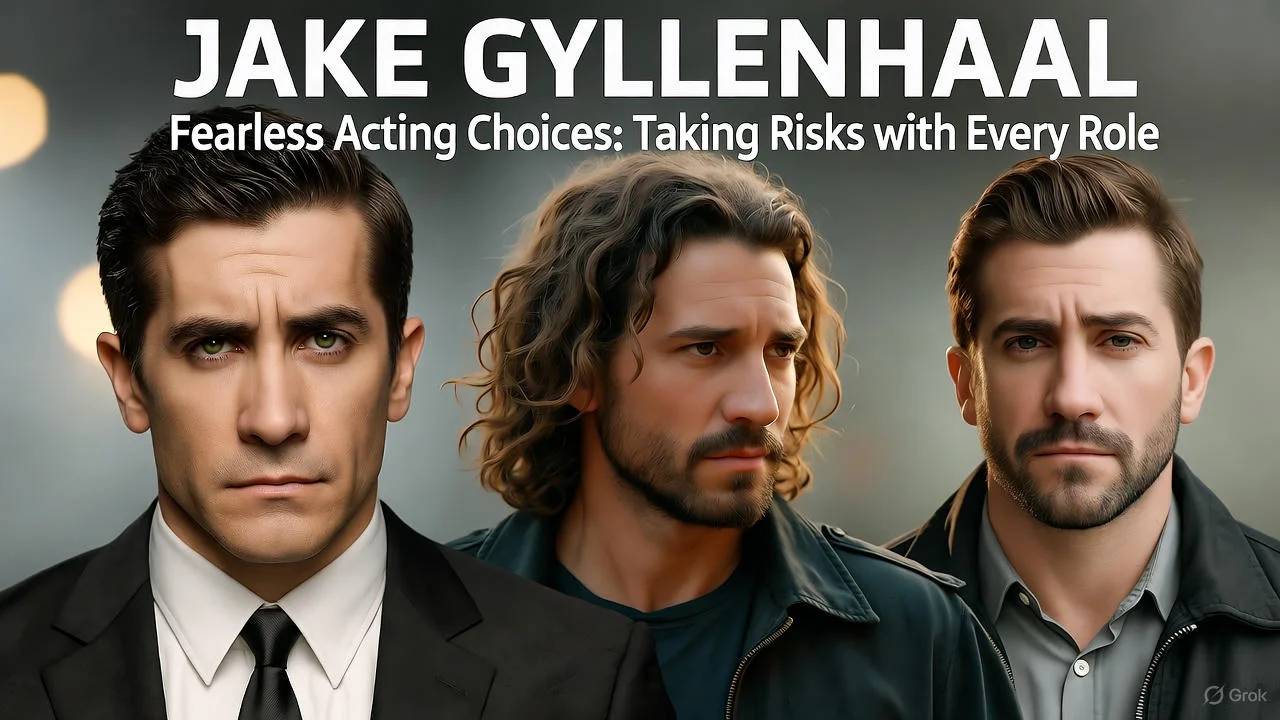
In the ever-evolving landscape of Hollywood, very few actors manage to consistently surprise audiences, critics, and even their peers. Jake Gyllenhaal has carved out a career defined not by safe choices, but by his willingness to take risks. From emotionally wrenching dramas to psychologically intense thrillers, from blockbuster action films to intimate character studies, Gyllenhaal demonstrates a rare fearlessness in his approach to acting.
Over the last two decades, he has built a reputation as one of the most daring and versatile actors of his generation. His filmography is not a collection of predictable roles designed for box-office comfort instead, it’s a showcase of bold experiments, transformative performances, and characters that challenge audience expectations.
This blog takes a deep dive into Jake Gyllenhaal’s fearless acting choices, exploring how his willingness to take risks has shaped his career, the specific roles that highlight his bravery, and the lasting legacy of his unconventional approach to Hollywood stardom.
The Early Years: Setting the Tone for Risk
Gyllenhaal’s career began with early roles that already hinted at his unique path. While many young actors at the time chased commercial teen dramas, Gyllenhaal gravitated toward offbeat and emotionally complex characters.
- October Sky (1999): His breakout role as Homer Hickam, a small-town boy aspiring to be a rocket scientist, set the stage for his ability to portray sensitive, determined characters.
- Donnie Darko (2001): This cult classic cemented Gyllenhaal’s status as an actor unafraid of weird, cerebral projects. Playing a troubled teen who sees visions of a menacing rabbit, he dove headfirst into psychological ambiguity, proving his interest in roles that challenged both himself and the audience.
From the start, he avoided the cookie-cutter path of becoming a conventional Hollywood heartthrob, choosing instead to experiment with unconventional scripts.
Gyllenhaal’s career began with early roles that already hinted at his unique path. While many young actors at the time chased commercial teen dramas, Gyllenhaal gravitated toward offbeat and emotionally complex characters.
- October Sky (1999): His breakout role as Homer Hickam, a small-town boy aspiring to be a rocket scientist, set the stage for his ability to portray sensitive, determined characters.
- Donnie Darko (2001): This cult classic cemented Gyllenhaal’s status as an actor unafraid of weird, cerebral projects. Playing a troubled teen who sees visions of a menacing rabbit, he dove headfirst into psychological ambiguity, proving his interest in roles that challenged both himself and the audience.
From the start, he avoided the cookie-cutter path of becoming a conventional Hollywood heartthrob, choosing instead to experiment with unconventional scripts.
Transformative Roles That Define Fearlessness
Brokeback Mountain (2005): Vulnerability as Courage
In Ang Lee’s Brokeback Mountain, Gyllenhaal portrayed Jack Twist, a role that required immense vulnerability in exploring a same-sex relationship in a conservative cultural moment. The risk was enormous, but the reward was history-making: the film earned critical acclaim, cultural significance, and cemented Gyllenhaal’s reputation as an actor unafraid of tackling sensitive themes.
Nightcrawler (2014): Physical and Psychological Transformation
As Lou Bloom, Gyllenhaal lost weight, changed his physicality, and embraced a disturbing mindset to portray a morally bankrupt stringer chasing crime stories. His gaunt appearance, manic energy, and eerie calm highlighted his fearlessness in embodying unsettling characters. The performance became a career-defining risk, earning widespread critical acclaim.
Southpaw (2015): The Body as a Tool
To play boxer Billy Hope, Gyllenhaal underwent a grueling physical transformation, gaining muscle mass and training like a professional fighter. The role pushed him physically and emotionally, as he balanced action sequences with deep grief-driven acting. It showcased his willingness to endure physical pain and discipline for authenticity.
Enemy (2013): Psychological Complexity
In Denis Villeneuve’s surreal thriller, Gyllenhaal played dual roles a meek professor and his doppelgänger. The performance required nuanced shifts in physicality and emotional energy, proving his fearlessness in diving into experimental storytelling.
Prisoners (2013): The Unsettling Detective Loki
As Detective Loki, Gyllenhaal gave one of his most nuanced performances, embodying subtle eccentricities like facial tics and emotional restraint. It was a risk to add such personal touches to a procedural character, but it paid off by making Loki unforgettable in a film already filled with powerhouse performances.
Gyllenhaal’s Approach to Risk: A Philosophy of Acting
Jake Gyllenhaal has often spoken about his acting philosophy, which revolves around truth, immersion, and unpredictability.
- Chasing Roles That Scare Him – He actively chooses roles that feel daunting, believing that fear is a sign of artistic growth.
- Rejecting Typecasting – Instead of sticking to one genre, he jumps between dramas, thrillers, musicals, and action films, ensuring his career avoids stagnation.
- Immersive Preparation – From extreme physical training to method-like research, Gyllenhaal dives into preparation, often pushing himself beyond comfort zones.
This mindset separates him from many actors who rely on safe roles and franchises.
Balancing Indie Projects and Hollywood Blockbusters
Another aspect of Gyllenhaal’s fearlessness is his ability to navigate both independent cinema and big-budget films.
- Indie Films: Projects like Donnie Darko, Enemy, and Demolition allowed him to experiment artistically without box-office pressure.
- Blockbusters: Roles in films like The Day After Tomorrow and Spider-Man: Far From Home showed his ability to command mainstream appeal, while still injecting depth into commercial roles.
By refusing to be pigeonholed, Gyllenhaal proves that risks can be taken both in arthouse projects and Hollywood tentpoles.
The Physical Risks: Transforming the Body
Gyllenhaal often uses his body as a canvas, undergoing extreme transformations:
- Shedding weight for Nightcrawler to achieve a predatory look.
- Bulking up for Southpaw with a professional boxer’s physique.
- Adding subtle physical quirks for Prisoners, like hand tattoos and nervous gestures.
These choices aren’t for show they are tools that make his characters more authentic and layered.
Emotional Risks: Exposing Vulnerability
Equally important are the emotional risks he takes. Gyllenhaal is not afraid to cry on screen, show weakness, or embrace uncomfortable intimacy. In Brokeback Mountain, he dismantled stereotypes by portraying raw, tender emotion. In Demolition, he played a man coping with grief in unconventional ways, showing a willingness to explore emotional extremes that many actors avoid.
Collaborations That Encourage Risk
Gyllenhaal often works with visionary directors who challenge him:
- Denis Villeneuve (Enemy, Prisoners) is pushing him into psychological complexity.
- Dan Gilroy (Nightcrawler, Velvet Buzzsaw) explores dark satire and unsettling characters.
- Ang Lee (Brokeback Mountain) guides him through emotional vulnerability.
These collaborations allow him to push boundaries and avoid complacency.
Audience and Critical Response
While not every risk has been universally praised, audiences respect Gyllenhaal for his daring approach. Films like Nightcrawler and Prisoners earned him critical acclaim, while even divisive projects like Velvet Buzzsaw sparked conversations about his bold choices.
The Legacy of a Risk-Taker
Jake Gyllenhaal’s legacy in Hollywood is not about being the highest-grossing star but about being one of the most fearless actors of his generation. His body of work demonstrates that taking risks, whether in physical transformation, emotional exposure, or experimental storytelling, is what keeps his career compelling.
As he continues to take on new projects, from Broadway performances to upcoming thrillers, audiences can expect one constant: Jake Gyllenhaal will never settle for safe.
Conclusion
Jake Gyllenhaal’s career is a testament to the power of taking risks in art. By rejecting predictability, embracing transformation, and exposing vulnerability, he has become one of Hollywood’s most fascinating performers. His fearless acting choices ensure that every role he takes on challenges both himself and the audience, making him a true risk-taker in the world of cinema.
FAQs
What makes Jake Gyllenhaal’s acting fearless?
His willingness to embrace unconventional, challenging roles and undergo extreme physical and emotional transformations sets him apart.
What is Jake Gyllenhaal’s most daring role?
Many critics point to Nightcrawler as his most daring role, given the disturbing mindset and physical transformation involved.
Has Gyllenhaal ever played it safe in his career?
While he has appeared in commercial films, even those performances are marked by depth and unique interpretations, avoiding true “safe” choices.
Does Jake Gyllenhaal use method acting?
He isn’t strictly a method actor but often uses immersive techniques, such as physical training, research, and adopting habits that align with his characters.
What upcoming roles showcase his risk-taking?
Gyllenhaal continues to explore diverse projects, from thrillers to stage performances, ensuring his career remains unpredictable.