
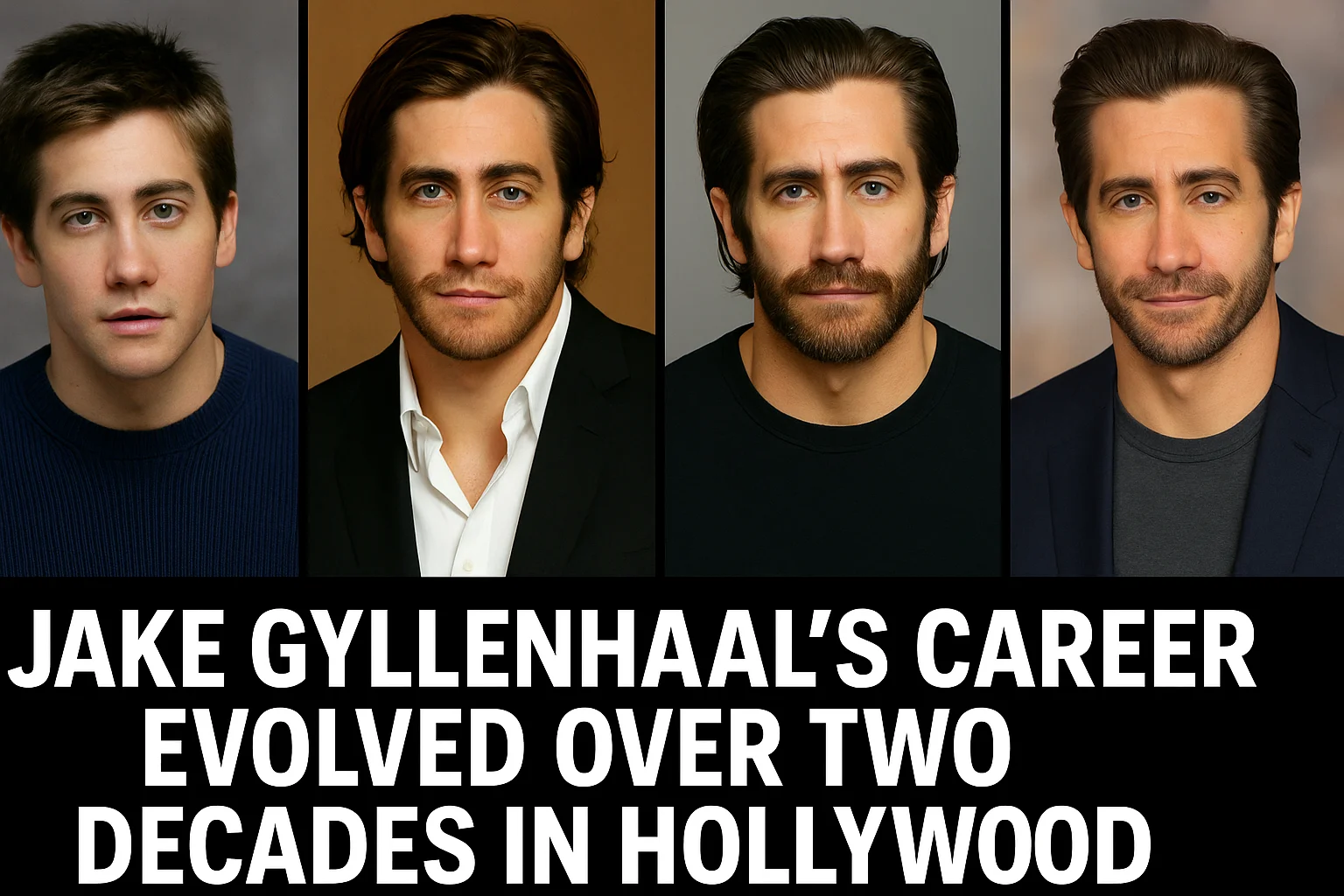
Over the past twenty years, Jake Gyllenhaal has become one of Hollywood’s most versatile and respected actors. From his indie beginnings to blockbuster performances, his career reflects an ongoing commitment to craft, experimentation, and evolution. Unlike many actors who become typecast, Gyllenhaal has navigated multiple genres—thrillers, dramas, comedies, action films while consistently pushing boundaries.
This journey not only highlights his talent and adaptability but also underscores his place as one of the defining actors of his generation.
Early Beginnings: The Foundations of a Career
Jake Gyllenhaal was born into a film family, with director Stephen Gyllenhaal and screenwriter Naomi Foner as his parents, and actress Maggie Gyllenhaal as his sister. This environment gave him early exposure to cinema.
- Childhood Roles: He made his acting debut in City Slickers (1991) as Billy Crystal’s son.
- Teen Years: In the late ’90s, he appeared in small but significant roles in films like October Sky (1999), which showcased his natural charisma and emotional depth.
This early foundation set him apart as a serious actor with a promising trajectory.
Breakthrough: Donnie Darko and Indie Stardom
Gyllenhaal’s breakthrough came in 2001 with Donnie Darko, a cult classic that remains a cornerstone of his career.
- Complex Role: Playing a troubled teenager experiencing visions, Gyllenhaal demonstrated emotional vulnerability and intellectual depth.
- Cult Following: The film became a cultural phenomenon, cementing Gyllenhaal as an actor willing to embrace experimental and unconventional cinema.
- Critical Acclaim: Critics praised his ability to carry a challenging, surreal narrative at such a young age.
This role marked the beginning of his identity as an actor drawn to layered, psychologically intense characters.
Rising Star: Early 2000s Roles
Following Donnie Darko, Gyllenhaal explored a mix of mainstream and independent projects.
- The Good Girl (2002): His chemistry with Jennifer Aniston displayed his romantic lead potential.
- Moonlight Mile (2002): Showed his ability to embody grief and growth.
- The Day After Tomorrow (2004): Introduced him to blockbuster audiences, proving he could carry large-scale disaster films.
This period revealed his flexibility across genres, a pattern that would define his career.
Career-Defining Moment: Brokeback Mountain (2005)
One of the most pivotal points in Gyllenhaal’s career was his role as Jack Twist in Brokeback Mountain.
- Critical Acclaim: The film earned him an Academy Award nomination for Best Supporting Actor.
- Cultural Impact: The movie challenged mainstream perceptions of masculinity and love, and Gyllenhaal’s performance was praised for its emotional honesty and courage.
- Collaborations: His partnership with Heath Ledger created one of the most powerful on-screen dynamics of the 2000s.
This film solidified Gyllenhaal as a serious dramatic actor capable of profound performances.
The 2010s: Reinvention Through Complex Roles
The 2010s marked a transformative era for Gyllenhaal, with him embracing psychologically demanding and transformative characters.
- Prisoners (2013): As Detective Loki, he displayed restrained intensity in a gripping thriller.
- Enemy (2013): Collaborating with Denis Villeneuve, he played dual roles, exploring identity and paranoia.
- Nightcrawler (2014): Perhaps his most celebrated role, Gyllenhaal embodied Lou Bloom, a morally ambiguous crime journalist. His physical transformation, sunken frame, and chilling demeanor made it a career milestone.
- Southpaw (2015): He bulked up for the role of a boxer, showing physical dedication.
- Nocturnal Animals (2016): Balanced subtle vulnerability with raw emotional power.
During this decade, Gyllenhaal cemented his reputation as an actor unafraid of risk.
Entering Blockbusters: Marvel and Beyond
While known for indie and dramatic films, Gyllenhaal also stepped into mainstream franchises.
- Spider-Man: Far From Home (2019): As Quentin Beck/Mysterio, Gyllenhaal joined the Marvel Cinematic Universe, blending charm and villainy.
- His presence introduced him to a new generation of fans, proving he could thrive in superhero blockbusters without losing artistic credibility.
This balance between commercial appeal and artistic integrity is a hallmark of his career.
Jake Gyllenhaal’s Acting Style and Evolution
What makes Gyllenhaal’s career unique is his commitment to evolution and reinvention.
- Physical Transformations: From gaunt in Nightcrawler to muscular in Southpaw, he adapts his body to suit roles.
- Psychological Immersion: He often portrays characters with internal conflict, moral ambiguity, or obsessive traits.
- Genre Versatility: Seamlessly moves between thrillers, dramas, romantic films, action, and even musical theater (Sunday in the Park with George on Broadway).
This adaptability ensures his relevance in Hollywood across decades.
Collaborations with Acclaimed Directors
Gyllenhaal’s career is also defined by his collaborations:
- Denis Villeneuve (Prisoners, Enemy): Known for psychological thrillers.
- Ang Lee (Brokeback Mountain): Helped him achieve award recognition.
- Dan Gilroy (Nightcrawler): A career-defining performance.
- David Fincher (Zodiac): Cast him as a determined journalist, showcasing his investigative intensity.
These partnerships reveal Gyllenhaal’s ability to thrive under visionary filmmakers.
Awards and Recognition
Over two decades, Jake Gyllenhaal has received numerous accolades:
- Academy Award Nomination for Brokeback Mountain.
- BAFTA Award for Best Supporting Actor (Brokeback Mountain).
- Multiple Golden Globe and SAG nominations across genres.
- Theater acclaim, reinforcing his reputation as a multi-platform actor.
While he may not have multiple Oscars, his career is defined by critical respect and longevity
The Evolution of Public Persona
Beyond the screen, Gyllenhaal has cultivated a reputation as:
- A thoughtful, private star who avoids overexposure.
- A respected theater actor, balancing Hollywood with stage performances.
- A cultural icon, admired for his dedication, artistry, and ability to tackle socially relevant roles.
This careful curation of his public image ensures he’s seen as more than just a movie star, he’s an artist with integrity.
The Current Era: New Challenges and Future Roles
As of the 2020s, Gyllenhaal continues to reinvent himself:
- The Guilty (2021): A tense drama filmed during the pandemic, showcasing his ability to carry an entire narrative.
- Upcoming projects include road thrillers, biopics, and stage roles, proving his refusal to stagnate.
His career continues to blend risk-taking with mass appeal.
Conclusion: Two Decades of Transformation
From Donnie Darko to Nightcrawler, from indie dramas to Marvel blockbusters, Jake Gyllenhaal’s career represents the ideal balance between art and commerce. Over two decades, he has transformed from a promising young actor into a Hollywood powerhouse, admired for his versatility, intensity, and longevity.
Gyllenhaal’s evolution proves that true stardom isn’t about repetition—it’s about reinvention, risk, and authenticity.
FAQs
What was Jake Gyllenhaal’s breakthrough role?
His breakout role was Donnie Darko (2001), which became a cult classic.
Has Jake Gyllenhaal won an Academy Award?
He has been nominated for an Oscar for Brokeback Mountain but has not yet won.
What is his most transformative role?
Many consider Nightcrawler his most transformative performance, both physically and emotionally.
Does Jake Gyllenhaal also work in theater?
Yes, he has starred in productions like Sunday in the Park with George, earning acclaim for his stage performances.
How has his career stayed relevant for 20+ years?
By constantly evolving, balancing indie films with blockbusters, and collaborating with visionary directors.