
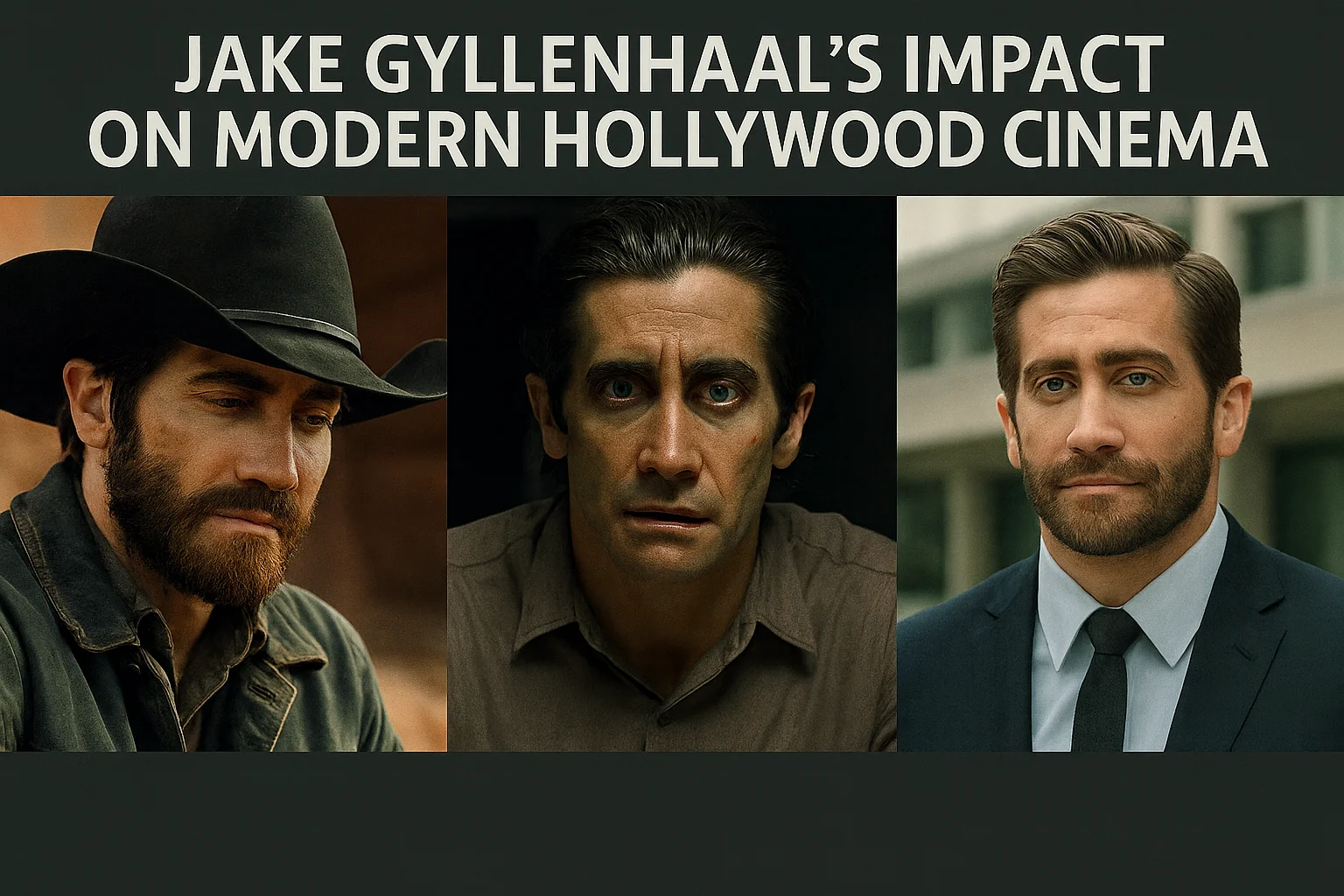
Few actors embody the spirit of modern Hollywood as dynamically as Jake Gyllenhaal. Over the course of more than two decades, Gyllenhaal has proven himself to be one of the most versatile, fearless, and consistently compelling performers of his generation. From indie dramas to blockbuster spectacles, from chilling antiheroes to vulnerable protagonists, his filmography reflects not just an impressive career but also a shift in how modern Hollywood defines talent, risk-taking, and artistry.
This article explores how Jake Gyllenhaal has influenced contemporary cinema, why he stands out among his peers, and what his legacy means for the future of Hollywood.
From Child Actor to Breakout Star
Jake Gyllenhaal’s early years in film hinted at the depth and ambition that would define his career. Born into a family deeply rooted in the film industry, his father a director, his mother a screenwriter, and his sister Maggie Gyllenhaal an actress Jake’s entry into Hollywood might have seemed inevitable. Yet, he quickly proved that his success wasn’t the product of connections alone.
Films like October Sky (1999) introduced him as a sensitive, wide-eyed actor with an innate ability to connect emotionally with audiences. His performance as Homer Hickam, a boy chasing dreams of rocketry against the backdrop of a small coal-mining town, demonstrated a sincerity that set him apart from other young actors of his era.
This foundation of earnest storytelling prepared him for the bold choices that would define his adult career.
Breaking the Mold with Bold Choices
Many actors seek safe roles early in their careers, but Gyllenhaal chose complexity. His breakout adult performance in Donnie Darko (2001) established him as a cult icon. The film, with its surreal tone and existential questions, was risky, but Gyllenhaal’s portrayal of a troubled teen navigating visions and philosophical questions made it unforgettable.
Unlike many of his peers, Gyllenhaal was unafraid to embrace darker, stranger roles. This willingness to take risks defined his career and positioned him as a modern actor more concerned with artistry than box office guarantees.
Defining Performances That Shaped Modern Cinema
Brokeback Mountain (2005): Expanding Hollywood’s Boundaries
Ang Lee’s Brokeback Mountain was more than just a film; it was a cultural moment. As Jack Twist, Gyllenhaal delivered a vulnerable, heartbreaking performance opposite Heath Ledger. Together, they created one of the most authentic portrayals of queer love ever seen in mainstream cinema.
The film’s success and critical acclaim challenged Hollywood to reconsider its boundaries, paving the way for more inclusive and daring stories. Gyllenhaal’s courage in taking on such a role at a time when few leading men would was a turning point in modern cinema.
Nightcrawler (2014): Redefining the Antihero
As Lou Bloom in Nightcrawler, Gyllenhaal transformed himself into one of cinema’s most chilling modern antiheroes. His gaunt appearance, unblinking stare, and disturbing ambition created a character both magnetic and repulsive. The performance showcased his fearlessness in portraying morally ambiguous figures, reflecting Hollywood’s shift toward more complex, flawed protagonists.
Prisoners (2013): The Power of Subtlety
In Denis Villeneuve’s Prisoners, Gyllenhaal played Detective Loki, a character marked by quiet intensity, subtle mannerisms, and emotional restraint. His layered performance balanced Hugh Jackman’s raw desperation, proving Gyllenhaal’s mastery of subtle character work.
Spider-Man: Far From Home (2019): Redefining Blockbuster Villains
Even in the world of superheroes, Gyllenhaal refused to play it safe. His portrayal of Quentin Beck, a.k.a. Mysterio, added nuance and unpredictability to a Marvel villain. He balanced charm with menace, showing that even in mainstream franchises, he could bring complexity and emotional weight.
Gyllenhaal and the Evolution of the Modern Leading Man
In Hollywood’s past, leading men were often defined by rugged masculinity or conventional heroism. Gyllenhaal helped shift this narrative. His characters often embody vulnerability, internal conflict, or outright darkness. Instead of embodying perfection, he embraces imperfection, and audiences find truth in that.
His approach represents the evolution of the “modern leading man”: one who doesn’t shy away from weakness, moral ambiguity, or emotional exposure. This shift has influenced not just his contemporaries but also younger actors entering Hollywood today.
Collaborations with Visionary Directors
Part of Gyllenhaal’s impact comes from his collaborations with some of the most innovative filmmakers of the modern era:
- Denis Villeneuve (Prisoners, Enemy): Highlighted his ability to inhabit unsettling psychological spaces.
- David Fincher (Zodiac): Showcased his subtle intensity in investigative dramas.
- Dan Gilroy (Nightcrawler): Allowed him to push boundaries in character transformation.
- Ang Lee (Brokeback Mountain): Revealed his emotional vulnerability and cultural impact.
These partnerships not only elevated his performances but also helped shape the tone and themes of modern Hollywood storytelling.
Risk-Taking as a Career Hallmark
Gyllenhaal’s willingness to embrace unusual, challenging roles has distinguished him from many of his peers. While other actors of his generation sought franchise safety, Gyllenhaal pursued roles that stretched his abilities and redefined what audiences expect from leading men.
Even when participating in blockbusters, he chooses roles that subvert expectations, ensuring his work never feels formulaic. His career is a study in balancing art with mainstream appeal, a hallmark of modern Hollywood cinema.
Influence on Indie and Mainstream Cinema
Gyllenhaal occupies a rare space in Hollywood: equally respected in indie circles and mainstream arenas. His performances in small, emotionally intense projects keep him rooted in artistic integrity, while his appearances in major studio films bring his unique sensibilities to larger audiences.
This dual influence has made him a bridge between independent cinema and Hollywood blockbusters, reinforcing the value of artistry in both.
Why Audiences Connect with Jake Gyllenhaal
- Authenticity: Gyllenhaal avoids superficial portrayals, grounding even extraordinary characters in human truth.
- Emotional Range: From tenderness to menace, he captures the full spectrum of human experience.
- Fearlessness: He takes risks that many actors avoid, challenging audiences as much as himself.
Versatility: His ability to move seamlessly between genres mirrors the evolution of modern Hollywood.
Conclusion: A Lasting Impact on Modern Hollywood
Jake Gyllenhaal is not just a successful actor; he is a transformative presence in modern Hollywood. Through daring role choices, collaborations with visionary directors, and a fearless embrace of vulnerability, he has reshaped how audiences and the industry define great acting.
His impact lies not only in the roles he has played but also in the doors he has opened for more diverse, complex, and emotionally honest storytelling. As Hollywood continues to evolve, Jake Gyllenhaal remains a guiding force an actor who embodies the spirit of risk, artistry, and authenticity that modern cinema needs.
FAQs
What was Jake Gyllenhaal’s breakout role?
While October Sky introduced him, Donnie Darko became his breakout adult role.
How did Brokeback Mountain influence Hollywood?
It challenged norms, expanded representation, and solidified Gyllenhaal as an actor unafraid of groundbreaking roles.
Has Jake Gyllenhaal been nominated for an Oscar?
Yes he earned a nomination for Brokeback Mountain and has received numerous critical accolades for other performances.
What sets Gyllenhaal apart from his peers?
His risk-taking, versatility, and refusal to be typecast.
How has Gyllenhaal influenced younger actors?
By proving that vulnerability, imperfection, and complexity can define a leading man in modern cinema.