
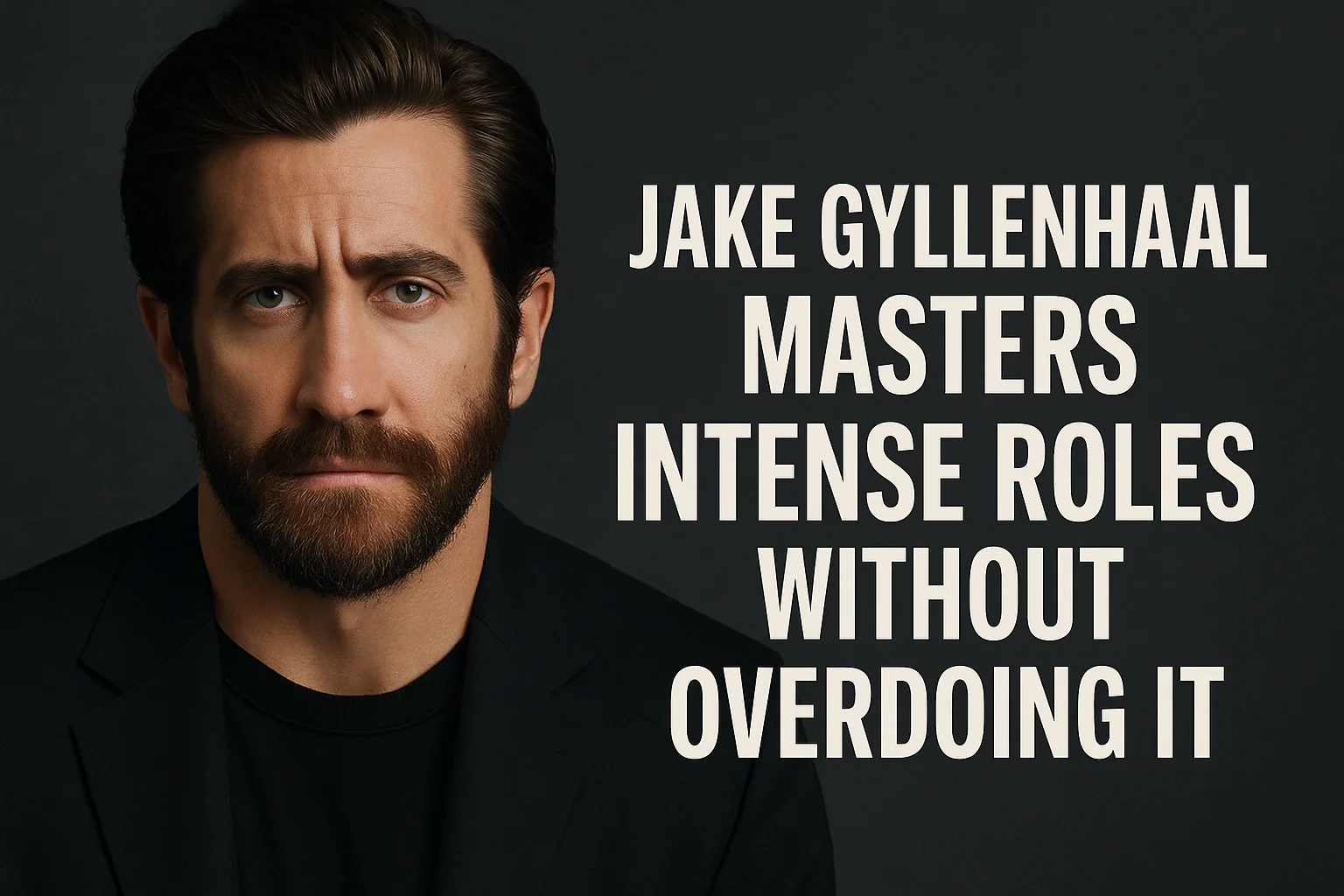
Jake Gyllenhaal has carved a reputation as one of Hollywood’s most compelling actors, known for his ability to dive into psychologically demanding and emotionally intense roles. From his haunting portrayal in Nightcrawler to his gut-wrenching performance in Prisoners, Gyllenhaal consistently takes on characters that demand depth, complexity, and raw emotion. Yet, unlike some actors who lean heavily into exaggerated expressions or melodrama, Gyllenhaal stands out because he masters intensity without ever overdoing it.
Audiences feel the tension in his characters, but it never feels forced or artificial. Instead, his performances carry a naturalism that makes even the most extreme roles believable. In this article, we’ll explore how Jake Gyllenhaal achieves this delicate balance, examining his techniques, preparation methods, physical transformations, and the philosophies that underpin his craft.
The Art of Controlled Intensity
Intensity in acting is a double-edged sword. Push too hard, and it can come across as theatrical or inauthentic. Play it too subtle, and the character risks fading into the background. Gyllenhaal has mastered the balance between these extremes.
What sets him apart is his commitment to precision. He doesn’t simply aim for big emotional explosions he thrives in the nuances: a twitch of the eye, a pause in speech, or a sudden shift in tone. These small but powerful choices create tension that feels real, drawing audiences deeper into the story.
Preparation: Building From the Inside Out
Jake Gyllenhaal is often described as a research-heavy actor. For him, intensity begins long before cameras roll. He dives into the psychology of his characters, studying their motivations, fears, and histories.
- Research-driven roles: For Nightcrawler, where he played the unsettling Louis Bloom, Gyllenhaal immersed himself in the world of freelance crime journalism and even shadowed real-life professionals to understand their perspective.
- Realism in preparation: In Southpaw, he trained like a professional boxer for months, not only to build the physique but to embody the discipline and mental toughness of a fighter.
- Character backstory building: Gyllenhaal often creates detailed inner lives for his characters, even elements never revealed on screen. This helps him play roles from the inside out, ensuring intensity emerges naturally.
By grounding his performances in preparation, his intensity feels authentic instead of fabricated.
Physical Transformation: Using the Body as a Tool
One of Gyllenhaal’s trademarks is his physical dedication to roles. He uses his body as a storytelling instrument, allowing physicality to amplify emotional intensity.
- In Nightcrawler, he lost significant weight to give Louis Bloom a gaunt, almost predatory appearance, pairing his look with sharp, frantic body movements.
- In Southpaw, he bulked up with months of boxing training, creating the physical presence of a true fighter. His movements in the ring reflected both aggression and vulnerability.
- In Prisoners, Gyllenhaal built subtle physical quirks for Detective Loki, such as blinking tics and restless energy, to communicate his character’s inner turmoil.
These physical details elevate his performances, ensuring that intensity is not just emotional but embodied.
Emotional Precision: Less Is More
Unlike actors who rely on big breakdown scenes to convey emotional turmoil, Gyllenhaal often chooses subtlety over spectacle. His performances simmer with controlled emotion, which makes the moments of explosion all the more impactful.
Take Prisoners for example. As Detective Loki, Gyllenhaal spends much of the film tightly wound, displaying tension through clenched jaws, darting eyes, and impatient gestures. When he finally erupts, the impact is powerful because it contrasts so sharply with his restraint.
This approach reflects his understanding that audiences are often more affected by what’s held back than what’s overtly expressed.
Collaborating With Directors for Balanced Performances
Gyllenhaal is highly collaborative with directors, which helps him refine his intensity. He understands that acting is not just about showcasing his abilities but about serving the story.
- With Denis Villeneuve (Prisoners, Enemy), Gyllenhaal worked to balance his characters’ psychological depth with the films’ slow-burn pacing.
- In Nightcrawler, director Dan Gilroy encouraged him to explore extremes, but Gyllenhaal grounded those extremes in realism so the character never slipped into caricature.
- With Antoine Fuqua in Southpaw, he leaned on the director’s guidance to balance the physical brutality of boxing with the emotional core of a grieving husband and father.
This willingness to adapt his intensity to a director’s vision prevents his performances from becoming self-indulgent.
Balancing Method Acting Without Losing Control
Jake Gyllenhaal is sometimes compared to method actors because of his immersive preparation. However, he avoids the pitfalls of overindulgent method acting, where the actor becomes so consumed by the character that it overshadows the performance.
Instead, he adopts a measured approach:
- He immerses himself emotionally but maintains enough distance to keep perspective.
- He allows his preparation to inform his performance rather than dictate it.
- He channels authenticity without losing control of the scene or overshadowing co-stars.
This balance is key to his ability to deliver intense but controlled performances.
Key Examples of Controlled Intensity
Nightcrawler (2014)
Perhaps Gyllenhaal’s most iconic performance, Louis Bloom is unsettling yet captivating. His intensity comes not from shouting or dramatic meltdowns but from quiet menace. His wide-eyed stares, eerie calm, and sudden bursts of aggression are carefully modulated, making Bloom one of cinema’s most disturbing characters.
Prisoners (2013)
As Detective Loki, Gyllenhaal brings controlled tension throughout the film. His intensity simmers beneath the surface, visible in his nervous tics and laser-focused determination. His restraint highlights the desperation of the families he is trying to help.
Southpaw (2015)
Here, Gyllenhaal embodies raw physical and emotional pain. While the boxing scenes showcase brutal intensity, his emotional breakdowns are rooted in grief and fatherhood, making them resonate beyond physical action.
Enemy (2013)
In this surreal thriller, Gyllenhaal plays dual roles, using subtle differences in posture, tone, and presence to distinguish them. The film’s tension lies in his understated intensity, leaving audiences unsettled without clear answers.
Why Audiences Connect With His Intensity
Audiences are drawn to Jake Gyllenhaal’s performances because they feel real, not performative. His characters often embody struggles with identity, morality, and control—themes that resonate with universal human experiences.
By avoiding exaggeration, Gyllenhaal allows viewers to project their own emotions into the performance, creating a deeper connection. His intensity is not about dominating the screen but about pulling audiences into the emotional fabric of the story.
The Legacy of Controlled Intensity
Jake Gyllenhaal’s approach to intense roles has influenced perceptions of modern acting. In an industry where extremes often grab headlines, his commitment to authentic, nuanced performances sets him apart.
His legacy lies in showing that intensity doesn’t require over-the-top theatrics. Instead, it’s about control, precision, and respect for the story being told.
Conclusion
Jake Gyllenhaal has mastered the rare art of delivering intensity without overdoing it. Through meticulous preparation, physical transformation, emotional subtlety, and collaboration, he crafts characters that feel both gripping and authentic. His performances remind us that the most powerful intensity often lies in restraint.
As he continues to take on challenging roles, one thing is clear: Jake Gyllenhaal will remain one of Hollywood’s most fascinating actors, not because of how loud his performances are, but because of how deeply they resonate.
FAQs
How does Jake Gyllenhaal prepare for intense roles?
He combines deep research, emotional immersion, and physical transformation to ground his characters in authenticity.
Is Jake Gyllenhaal a method actor?
He uses some method techniques but avoids fully losing himself in characters, ensuring control and balance in his performances.
Which of his roles best showcases controlled intensity?
Nightcrawler, Prisoners, and Southpaw are standout examples of his ability to balance intensity with subtlety.
Why do his performances feel so authentic?
Because he prioritizes emotional truth, nuanced gestures, and restrained choices over exaggerated theatrics.
How does Gyllenhaal’s intensity compare to other actors?
Unlike actors who rely on grand emotional displays, Gyllenhaal’s intensity comes from precision and restraint, which makes his performances uniquely powerful.