
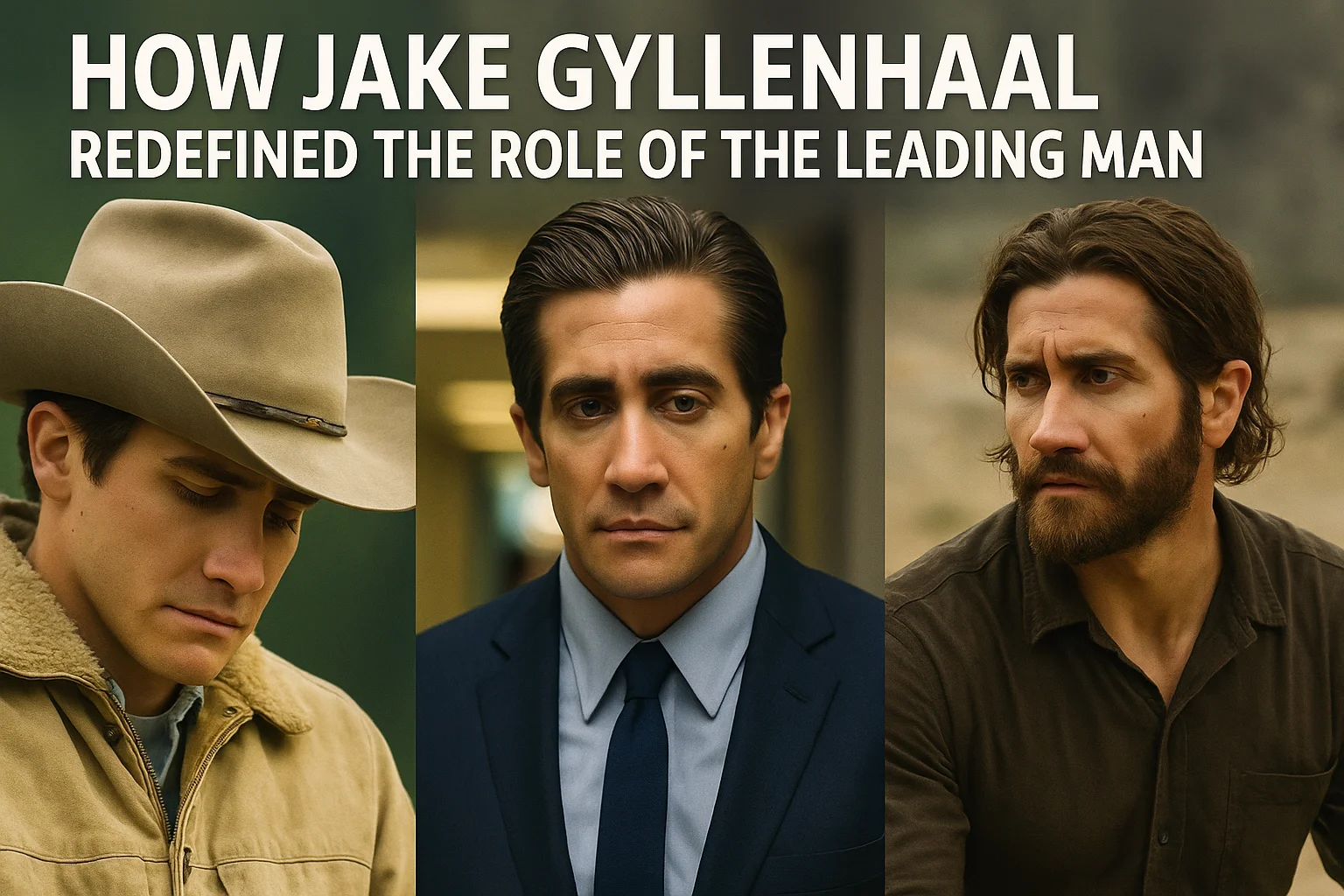
For decades, Hollywood has presented the “leading man” archetype as someone charming, physically strong, and often one-dimensional. But Jake Gyllenhaal has spent his career challenging and reshaping that definition. With roles ranging from troubled antiheroes to romantic dreamers, Gyllenhaal has shown that a leading man can be complex, flawed, and emotionally raw, while still captivating audiences.
This blog explores how Jake Gyllenhaal has redefined the traditional role of the leading man, carving out a new space in modern cinema that blends vulnerability, intensity, and range.
Breaking Away from Hollywood Stereotypes
Most classic leading men in Hollywood fit into predictable molds:
- The charming romantic hero (Think Cary Grant or Hugh Grant).
- The action-heavy tough guy (Think Bruce Willis or Arnold Schwarzenegger).
Jake Gyllenhaal, however, consistently avoids being boxed into these categories. From his early career in Donnie Darko to acclaimed performances in Nightcrawler and Brokeback Mountain, Gyllenhaal chooses characters that challenge societal norms and redefine masculinity on screen.
Instead of relying on charm or brute strength, he leans into emotional depth, inner conflict, and psychological nuance qualities that make his roles memorable and layered.
Vulnerability as Strength
One of the clearest ways Gyllenhaal redefines the leading man is by embracing vulnerability. In Brokeback Mountain (2005), his portrayal of Jack Twist was both tender and heartbreaking, proving that leading men could be deeply emotional and break away from rigid stereotypes of masculinity.
In Southpaw (2015), his role as boxer Billy Hope showcased a man whose external toughness crumbled under grief and loss. Instead of being a standard sports-movie hero, Gyllenhaal humanized the archetype, showing that even the strongest fighters can be broken inside.
This willingness to show fragility makes Gyllenhaal’s characters relatable and real, something audiences now crave in an era of more authentic storytelling.
The Antihero Appeal
Another way Gyllenhaal reinvents the leading man is by stepping into the role of the antihero. His performance as Louis Bloom in Nightcrawler (2014) shocked audiences with its intensity and moral ambiguity. Bloom is ambitious, cunning, and unsettlingly detached, but Gyllenhaal’s layered performance made viewers both disturbed and fascinated.
By taking risks with darker, morally complex roles, Gyllenhaal demonstrates that a leading man doesn’t need to be “likable” to be compelling. Instead, he proves that audiences are drawn to characters who challenge their perspectives and provoke thought.
Physical and Psychological Transformation
Gyllenhaal is also known for fully transforming himself for his roles, both physically and psychologically.
- For Southpaw, he underwent an intense body transformation, training like a professional boxer to capture authenticity.
- For Nightcrawler, he lost a significant amount of weight, embodying the wiry desperation of Louis Bloom.
- In Stronger (2017), portraying a Boston Marathon bombing survivor, he delivered one of his most emotionally demanding performances, balancing physical vulnerability with resilience.
This commitment to transformation signals a shift in what it means to be a leading man today less about a consistent image, and more about complete immersion into character.
Romantic Roles with Depth
Though often praised for his darker roles, Gyllenhaal has also redefined the romantic leading man. In films like Love & Other Drugs (2010), he brought charm and humor, but layered it with genuine vulnerability and struggle. Unlike the typical “perfect” romantic hero, his characters often wrestle with personal flaws, making his performances more grounded and relatable.
By blending romance with realism, he shows that leading men can still be magnetic love interests without being idealized or one-note.
Redefining Modern Masculinity
At the heart of Gyllenhaal’s career is his ability to redefine masculinity for modern cinema. Instead of leaning into outdated stereotypes of stoicism and dominance, he presents men as layered individuals capable of love, grief, fear, and self-destruction.
This shift reflects a broader cultural movement toward valuing emotional authenticity and vulnerability, both in storytelling and in real life. Gyllenhaal’s characters embody that evolution, making him a symbol of the new era of Hollywood leading men.
Why Audiences Connect with Gyllenhaal
Audiences connect with Gyllenhaal because he makes every character feel real. He isn’t afraid to portray flaws, contradictions, and emotional chaos. His performances balance intensity with relatability, leaving viewers not just entertained but also emotionally impacted.
By redefining the leading man, Gyllenhaal has opened the door for other actors to embrace complexity and vulnerability, ensuring that Hollywood’s heroes continue to evolve.
Conclusion: A New Era of Leading Men
Jake Gyllenhaal’s career has proven that the definition of a leading man is no longer fixed. Through his fearless embrace of vulnerability, transformation, and complex roles, he has reshaped Hollywood’s expectations of male protagonists.
In doing so, he has not only secured his place as one of the most versatile actors of his generation but also inspired a reimagining of what it means to be a hero on screen—not perfect, but profoundly human.
FAQs
How has Jake Gyllenhaal redefined the role of the leading man?
He’s shifted the focus from charm and toughness to emotional depth, vulnerability, and complexity, challenging traditional Hollywood stereotypes.
Which Jake Gyllenhaal movie best represents this redefinition?
Nightcrawler and Brokeback Mountain are standout examples, showing his ability to blend intensity with vulnerability.
Does Gyllenhaal still take on traditional romantic roles?
Yes, but he brings realism and emotional complexity to them, as seen in Love & Other Drugs.
What makes Jake Gyllenhaal’s performances stand out from other actors?
His willingness to fully transform physically and emotionally, and his ability to balance dark intensity with human vulnerability.
How has his career influenced modern Hollywood?
He’s paved the way for leading men to embrace imperfection, depth, and realism, shifting audience expectations of heroes and protagonists.