
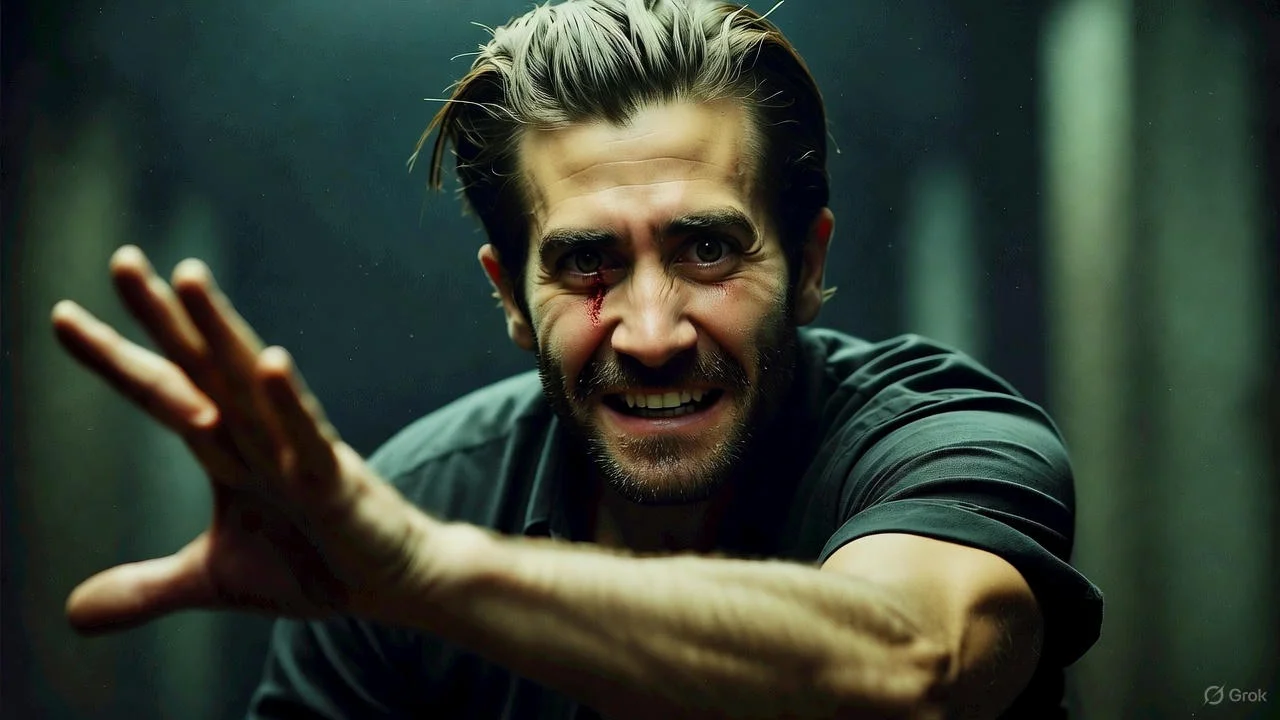
When discussing modern actors who fully commit to their roles, Jake Gyllenhaal consistently comes to mind. From romantic dramas to action thrillers, he has built a career on versatility. Yet, few performances in his filmography are as haunting and unforgettable as his portrayal of Lou Bloom in Nightcrawler (2014).
Directed by Dan Gilroy, Nightcrawler is a psychological thriller that explores ambition, morality, and media sensationalism. At its center is Gyllenhaal’s chilling transformation into a morally ambiguous man determined to climb the ladder of success no matter the cost. This role is often cited as one of his most powerful performances, and here’s why.
A Character Unlike Any Other
Lou Bloom is not your typical protagonist. He is a drifter turned crime videographer, obsessed with filming gruesome accidents and crimes to sell footage to local news stations. What makes him captivating and unsettling is his relentless ambition paired with a complete lack of empathy.
Gyllenhaal didn’t play Lou as a caricatured villain. Instead, he crafted a disturbingly real character whose manipulative charm and calculated persistence reflect the darker side of human ambition. This nuance is what elevated the performance.
Gyllenhaal’s Physical Transformation
For Nightcrawler, Gyllenhaal underwent a striking physical transformation.
- He lost around 30 pounds to give Lou a gaunt, hungry appearance, resembling a coyote prowling Los Angeles at night.
- His piercing, wide-eyed stare added to the eerie intensity, often leaving audiences uncomfortable yet unable to look away.
This commitment to the role showed not only his dedication but also how far he was willing to go to embody a character’s psychology.
Mastering Psychological Depth
One of the most powerful aspects of Gyllenhaal’s performance is how he captures the psychology of ambition without ethics. Lou speaks in rehearsed, business-like phrases, reflecting his obsession with self-help material and corporate jargon.
Behind the polite smile lies cold manipulation. Each interaction—whether negotiating with news producers, manipulating his assistant Rick (Riz Ahmed), or confronting competitors reveals Lou’s growing detachment from morality. Gyllenhaal’s ability to maintain this balance of charm and menace is what makes the performance unforgettable. One of the most powerful aspects of Gyllenhaal’s performance is how he captures the psychology of ambition without ethics. Lou speaks in rehearsed, business-like phrases, reflecting his obsession with self-help material and corporate jargon.
Behind the polite smile lies cold manipulation. Each interaction, whether negotiating with news producers, manipulating his assistant Rick (Riz Ahmed), or confronting competitors, reveals Lou’s growing detachment from morality. Gyllenhaal’s ability to maintain this balance of charm and menace is what makes the performance unforgettable.
Key Scenes That Define His Performance
- The Job Interview Scene
Lou’s mock-professional answers highlight both his intelligence and unsettling detachment from social norms. - The Negotiation with Nina (Rene Russo)
His conversation with the news director blends ambition, intimidation, and control, capturing Lou’s ability to exploit weaknesses in others. - The Climax Car Chase
As Lou orchestrates chaos for the sake of capturing dramatic footage, Gyllenhaal fully embodies the terrifying lengths his character is willing to go for success.
Each of these moments is charged with tension, largely due to Gyllenhaal’s precise and unsettling performance.
Critical Reception and Awards Buzz
Upon release, Nightcrawler received widespread acclaim, with many critics hailing it as Gyllenhaal’s career-best performance.
- He earned nominations at the Golden Globes, BAFTAs, and Screen Actors Guild Awards.
- While he was controversially snubbed for an Oscar nomination, his role in Nightcrawler is still remembered as one of the defining performances of the 2010s.
Why Nightcrawler Stands Out in His Career
Jake Gyllenhaal has played soldiers, lovers, action heroes, and complex outsiders, but Lou Bloom is distinct.
- It’s a role that required total immersion into a morally ambiguous psyche.
- Unlike other performances, Gyllenhaal carried the entire film almost single-handedly, keeping audiences engaged through sheer intensity.
- The character is a mirror of societal obsession with success, sensationalism, and media exploitation, making the performance feel timeless and socially relevant.
The Legacy of Gyllenhaal’s Nightcrawler
Nearly a decade after its release, Nightcrawler remains one of the most talked-about performances in Jake Gyllenhaal’s career. It’s not just powerful because of his transformation, but because he created a character that forces audiences to confront uncomfortable truths about ambition, morality, and the media’s role in shaping reality.
Lou Bloom is not easy to watch, but that’s precisely why he lingers in our memory.
FAQs
Why is Jake Gyllenhaal’s role in Nightcrawler considered so powerful?
Because of his complete transformation into Lou Bloom physically, psychologically, and emotionally making the character both terrifying and believable.
Did Jake Gyllenhaal win an Oscar for Nightcrawler?
No, though many critics believed he deserved at least a nomination. He did receive Golden Globe, BAFTA, and SAG nominations.
How much weight did Gyllenhaal lose for the role?
He lost around 30 pounds, giving his character a lean, hungry appearance.
What makes Lou Bloom such a unique character?
Lou is ambitious, intelligent, and articulate, but completely lacks empathy, making him a chilling reflection of unchecked ambition.
Is Nightcrawler based on a true story?
While Lou Bloom is fictional, the film was inspired by real freelance videographers in Los Angeles who chase crime scenes to sell footage to local news.