
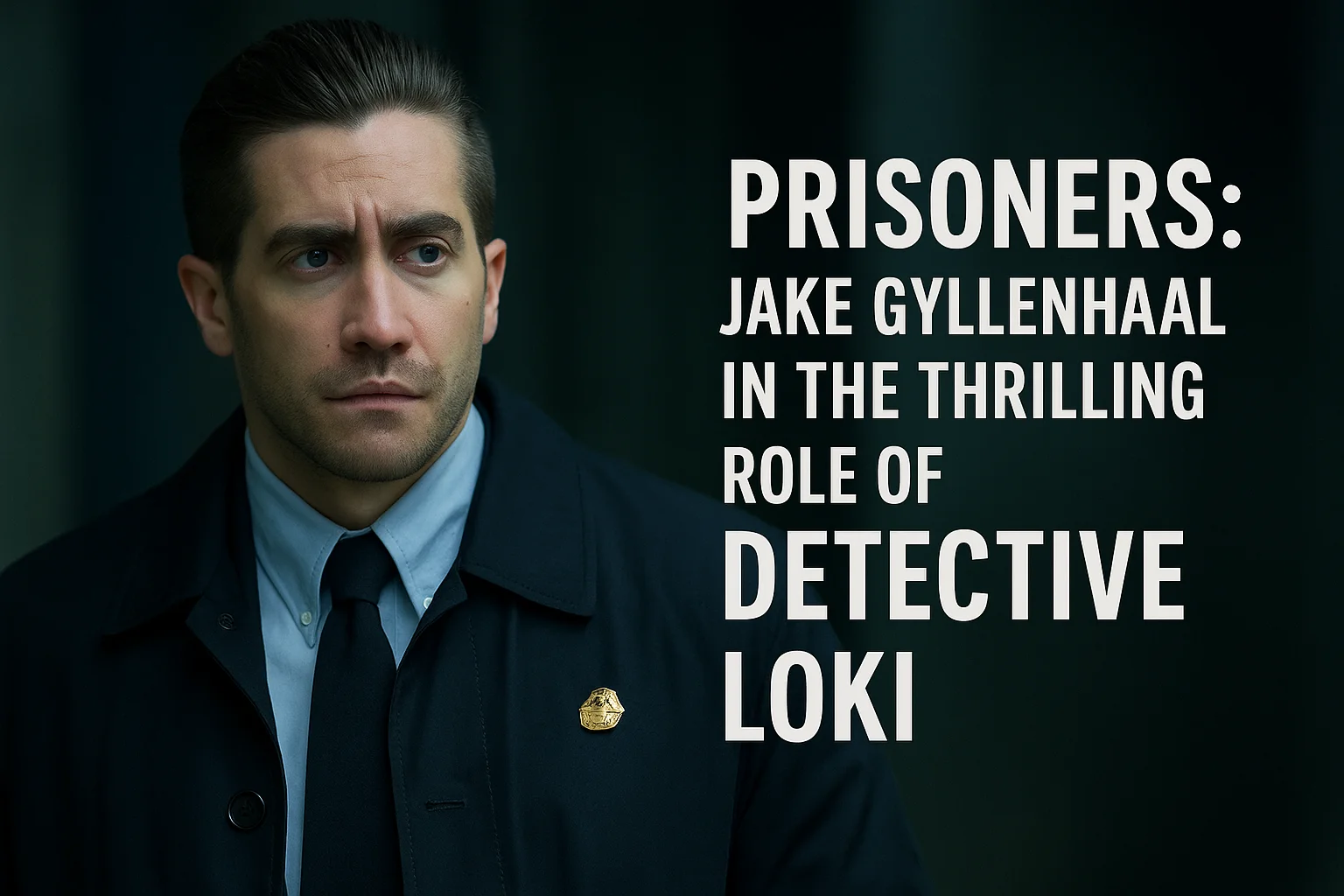
When Denis Villeneuve’s Prisoners hit theaters in 2013, it wasn’t just another crime thriller; it became a masterclass in atmospheric tension and moral ambiguity. At the center of this chilling narrative stood Jake Gyllenhaal as Detective Loki, a character who remains one of his most compelling portrayals. Gyllenhaal’s performance wasn’t flashy or overdramatic. Instead, he brought to life a detective whose quirks, intensity, and quiet persistence made him unforgettable.
In this blog, we’ll dive deep into how Gyllenhaal crafted Loki, explore the complexities of his character, analyze the performance techniques he used, and discuss why this role remains a landmark in his career and in the genre of psychological thrillers.
The Character of Detective Loki: More Than Just a Cop
Detective Loki is not your typical Hollywood detective. He isn’t the charming hero or the unshakable law enforcer. Instead, he is portrayed as flawed, enigmatic, and deeply human. His neck tattoos, blinking tics, and calculated silences reveal a character with a troubled backstory left deliberately unexplained by the film.
This ambiguity is part of what makes Loki so fascinating. Gyllenhaal didn’t just play a police officer solving a case; he embodied a man whose inner life remains an enigma, mirroring the film’s theme of unanswered questions. Loki’s relentless drive to solve the case reflects his own battle with chaos and order, justice and futility.
Gyllenhaal’s Preparation and Method Approach
Jake Gyllenhaal is known for immersive acting, and with Loki, he leaned heavily on method-inspired techniques. He researched real detectives, observed their mannerisms, and infused his character with personal touches such as the nervous blinking tic.
The tattooed fingers, slicked-back hair, and unorthodox costume choices were Gyllenhaal’s own creative contributions. He wanted Loki to stand apart visually and psychologically, someone who had lived through trauma and carried it silently. This method of internalizing backstory without direct exposition gave Loki layers of depth and mystery.
The Role of Silence and Subtlety
Much like Ryan Gosling, Gyllenhaal often relies on subtle, non-verbal communication. In Prisoners, Loki’s silence often speaks louder than his words. His piercing stares, abrupt pauses, and involuntary blinks suggest constant internal conflict.
When confronting suspects, his restraint builds tension; he doesn’t need long speeches to intimidate. In emotionally heavy scenes, his quiet reactions leave room for the audience to project their own interpretations, making the performance more haunting.
Detective Loki vs. Keller Dover: A Study in Contrasts
One of the film’s most fascinating dynamics is the contrast between Loki and Hugh Jackman’s Keller Dover. Keller represents raw emotion and desperation—a father willing to cross moral lines to save his daughter. Loki, in contrast, represents controlled persistence and systematic investigation.
Their interactions highlight two sides of human response to tragedy: emotional chaos versus structured determination. Without Gyllenhaal’s nuanced restraint, Keller’s breakdowns might have overwhelmed the narrative. Loki grounds the story, providing balance to the storm.
Key Scenes That Define Gyllenhaal’s Performance
- The Interrogation of Alex Jones (Paul Dano): Loki’s calm yet unsettling approach reveals his frustration with legal limitations. His inability to break Alex heightens the sense of hopelessness.
- Thanksgiving Diner Scene: Alone at a restaurant, Loki silently eats his meal while scanning the environment. His blinking tic, isolated demeanor, and watchfulness show his alienation from ordinary life.
- The Breakdown in the Car: After realizing he might be too late, Loki slams his fists on the steering wheel, releasing suppressed rage. It’s a rare moment of emotional eruption that makes his usual restraint even more powerful.
- The Final Scene: The ambiguous ending, where Loki hears Keller’s faint whistle, rests entirely on Gyllenhaal’s reaction. His subtle shift in expression leaves viewers questioning whether hope or despair prevails.
The Psychology of Loki: Why He Resonates With Audiences
Detective Loki’s appeal lies in his complexity. Viewers sense his haunted past, his obsessive drive, and his moral integrity, but they are never given clear answers. This mirrors the real-world ambiguity of justice; sometimes the truth remains hidden, sometimes the heroes are deeply flawed.
By embodying these contradictions, Gyllenhaal created a character who feels real, someone whose personal demons fuel his professional dedication. Audiences connected with him not as a perfect hero, but as a vulnerable human being navigating impossible choices.
Critical Reception of Gyllenhaal’s Performance
While Prisoners received praise across the board, critics singled out Gyllenhaal’s performance as a standout. Many highlighted how he transformed what could have been a conventional detective role into one of the film’s most memorable elements. His creation of Loki’s quirks and psychological depth demonstrated artistic risk-taking, proving his versatility as an actor.
Some critics compared his performance to classic noir detectives, while others noted its originality within the modern thriller landscape. For many, Loki remains one of Gyllenhaal’s finest roles to date.
How Prisoners Fits Into Jake Gyllenhaal’s Career Arc
By 2013, Gyllenhaal had already established himself as a talented actor with films like Donnie Darko, Brokeback Mountain, and Zodiac. But Prisoners cemented his reputation as a master of psychological tension.
It marked a transition into darker, more complex roles that continued with Nightcrawler (2014), where he pushed his craft even further into unsettling territory. Loki can be seen as the bridge between his earlier dramatic work and his later, more experimental performances.
The Collaboration With Denis Villeneuve
A huge part of Loki’s success comes from Gyllenhaal’s collaboration with director Denis Villeneuve. Villeneuve gave Gyllenhaal freedom to shape Loki’s character, encouraging improvisation and psychological depth. Their partnership proved so successful that they collaborated again on Enemy (2013).
Villeneuve’s meticulous direction paired with Gyllenhaal’s immersive acting created a synergy that elevated Prisoners beyond standard thriller conventions.
Loki as a Reflection of the Film’s Themes
Prisoners deals with morality, justice, and the thin line between good and evil. Loki embodies these themes. His obsessive blinking and isolated demeanor reflect the psychological toll of constantly facing human depravity. His ambiguous morality mirrors the blurred ethics of Keller Dover’s desperate choices.
Through Loki, the film explores whether justice can ever truly be achieved, or whether it always comes at a personal cost.
Legacy: Why Detective Loki Endures
A decade after its release, Prisoners still resonates, and much of that endurance rests on Gyllenhaal’s shoulders. Detective Loki remains one of the most intriguing detectives in modern cinema, unconventional, flawed, and unforgettable.
Unlike traditional heroes who solve the case and move on, Loki lingers in our minds, embodying the unresolved trauma of both the film’s characters and its viewers.
Conclusion: A Landmark Performance in Gyllenhaal’s Career
Jake Gyllenhaal’s Detective Loki is not just a character but a study in restraint, subtlety, and human complexity. Through carefully chosen quirks, non-verbal cues, and emotional authenticity, he turned what could have been a typical thriller role into one of the defining performances of his career.
Prisoners remains a masterpiece of modern suspense, and Loki stands as its moral and psychological anchor. For Gyllenhaal, this role didn’t just showcase his talent it reinforced his position as one of Hollywood’s most daring and versatile actors.
FAQs
Why did Jake Gyllenhaal add the blinking tic to Detective Loki?
Gyllenhaal wanted to give Loki a physical manifestation of inner tension, suggesting a troubled past without direct exposition.
Is Detective Loki based on a real person?
No, but Gyllenhaal researched detectives and incorporated traits from real law enforcement professionals to bring authenticity.
How does Prisoners compare to other crime thrillers?
Unlike many thrillers, Prisoners emphasizes moral ambiguity, atmosphere, and character depth over simple resolution.
Did Prisoners receive awards recognition?
While it didn’t win major Oscars, it earned critical acclaim and several nominations, solidifying Villeneuve’s reputation and boosting Gyllenhaal’s career trajectory.
Why is Detective Loki considered one of Gyllenhaal’s best roles?
Because he brought unique quirks, emotional restraint, and psychological depth that made the character unforgettable and elevated the entire film.