
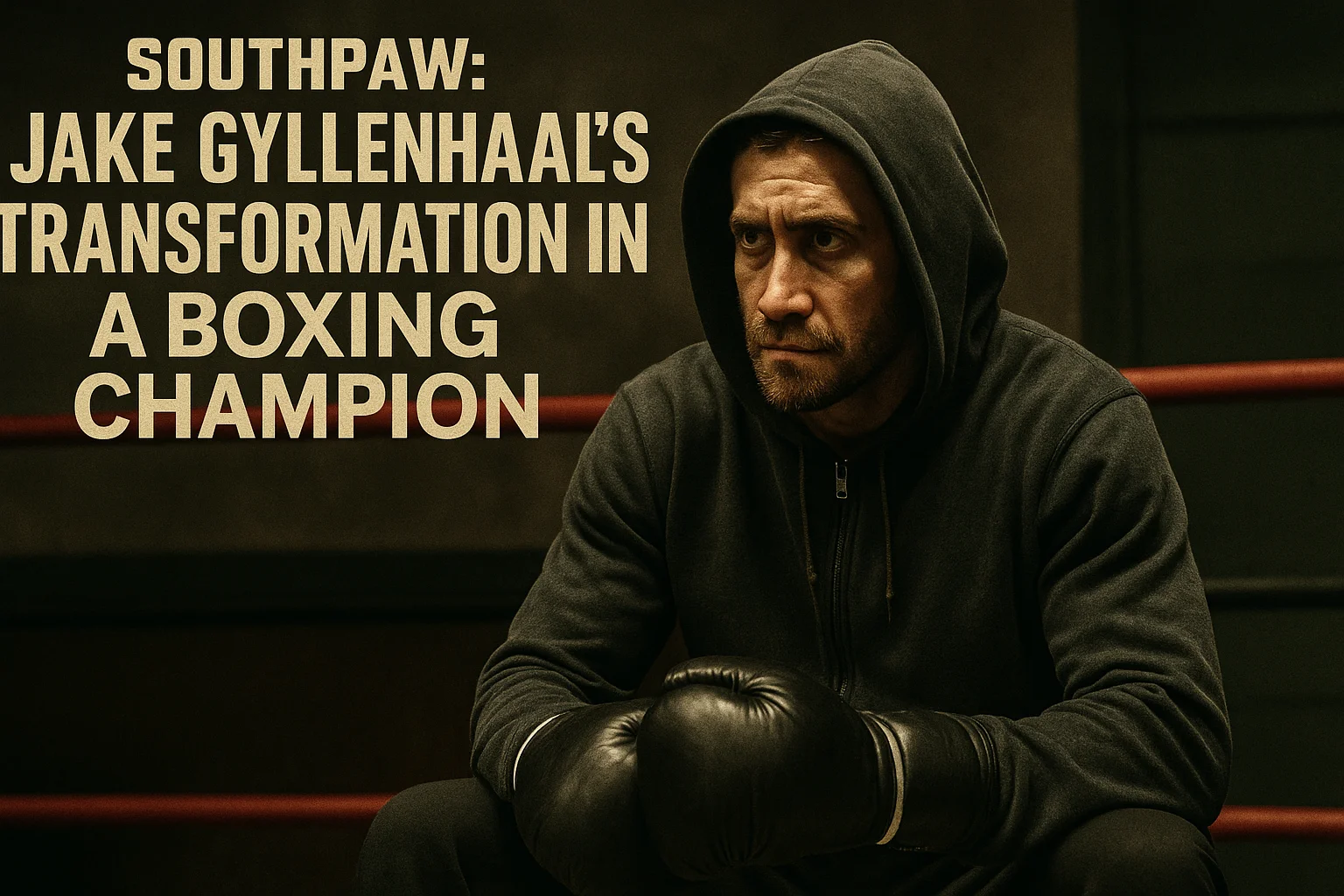
Few performances in modern cinema capture both the physical grit and the emotional devastation of a character as powerfully as Jake Gyllenhaal’s role in Southpaw (2015). Directed by Antoine Fuqua, this boxing drama pushed Gyllenhaal into one of the most challenging transformations of his career, both physically and emotionally. By portraying Billy “The Great” Hope, a once-undefeated light heavyweight champion whose life spirals into tragedy, Gyllenhaal delivered a performance that blended raw athleticism, deep vulnerability, and the kind of method acting dedication that has defined his two-decade career.
This blog takes an in-depth look at Gyllenhaal’s physical transformation, his psychological preparation, the themes of redemption that anchor Southpaw, and how this performance fits into his broader Hollywood legacy.
Jake Gyllenhaal’s Commitment to Transformation
Jake Gyllenhaal is no stranger to transformations. From his hauntingly gaunt look in Nightcrawler to his quiet restraint in Brokeback Mountain, he has often pushed his body and mind into uncharted territory for his characters. But Southpaw required a different kind of commitment, one rooted in the physical demands of boxing.
Unlike roles that could rely on makeup, wardrobe, or subtle character adjustments, Billy Hope had to look and move like a real fighter. Gyllenhaal underwent five months of intensive training, often sparring six days a week with professional boxers, including former champions. His goal wasn’t to merely mimic boxing movements but to embody the fluidity, rhythm, and toughness of a seasoned fighter.
The result was staggering. Gyllenhaal added 15 pounds of lean muscle, completely reshaping his physique. When he stepped into the ring onscreen, his movements carried authenticity, whether it was throwing sharp jabs, absorbing punishing body shots, or simply maintaining the footwork of a trained boxer. Critics and audiences alike praised the realism of the fight choreography, which stood out against the stylized, often exaggerated fight scenes in other boxing films.
The Emotional Core: From Champion to Broken Man
At its heart, Southpaw is not just about boxing, it’s about loss, grief, and redemption. Billy Hope starts the film as a world champion with fame, wealth, and a loving family. But when his wife, Maureen (played by Rachel McAdams), is tragically killed, his carefully constructed world collapses.
What makes Gyllenhaal’s performance so memorable is the way he portrays the emotional freefall of a man who has lost everything. His grief is visceral, raw tears, uncontrolled rage, and reckless decisions spiral into professional ruin. The boxing matches become metaphors for his emotional battles; every punch he throws feels like a desperate attempt to fight his inner demons.
Gyllenhaal’s ability to show this contrast between strength and fragility is what elevates the role. He is not just a bruised fighter trying to reclaim a title, he is a father trying to rebuild his life for the sake of his daughter. That human element grounds the film in a way that resonates far beyond the boxing ring.
The Role of Fatherhood in Southpaw
One of the strongest threads in Southpaw is Billy’s relationship with his daughter, Leila (played by Oona Laurence). After the death of his wife and his subsequent downward spiral, Billy loses custody of Leila. The heartbreak of that separation becomes the emotional engine of the film.
Gyllenhaal captures the desperation of a father who must prove his worth not just as a fighter, but as a man capable of raising his child. His interactions with Leila are tender, heartbreaking, and ultimately redemptive. These scenes add layers of humanity to what could have been just another sports drama.
For audiences, it’s this intersection of parental love and personal redemption that makes Southpaw more than a boxing movie. It’s a story of resilience, of rebuilding not only a career but a family bond.
Method Acting and Psychological Preparation
Jake Gyllenhaal has long been associated with method acting techniques, and Southpaw is no exception. His preparation went beyond physical training he immersed himself in the psychological mindset of a boxer.
- He studied the mental toll of combat sports: the loneliness of training camps, the psychological highs of victory, and the crushing lows of defeat.
- He shadowed real fighters, learning not just how they fight but how they live.
- He even experienced the exhaustion of sparring multiple rounds, which fueled his understanding of Billy Hope’s drained, battered state.
By internalizing both the physical and mental challenges of boxing, Gyllenhaal gave a performance that felt lived-in. Audiences weren’t watching Jake Gyllenhaal act, they were watching Billy Hope fight for his soul.
Boxing Films and Cultural Impact
The boxing genre has a long tradition in Hollywood, from Raging Bull to the Rocky franchise and Creed. Each great boxing film brings something new to the table. Southpaw fits into this lineage by exploring the psychological costs of fame, grief, and redemption.
Unlike the underdog story of Rocky, Billy Hope begins at the top and spirals downward. His fight isn’t about climbing the ranks, it’s about rebuilding his humanity. This reversal of the typical boxing narrative set Southpaw apart and gave Gyllenhaal the space to explore the depths of brokenness and resilience.
Collaborating with Antoine Fuqua
Director Antoine Fuqua is known for gritty, character-driven dramas (Training Day, The Equalizer), and his partnership with Gyllenhaal was a natural fit. Fuqua pushed for authenticity over spectacle, insisting that Gyllenhaal train like a professional fighter rather than rely on stunt doubles.
This directorial approach emphasized the realism of the boxing sequences, making every punch feel impactful. It also deepened the intensity of Gyllenhaal’s performance, as the exhaustion and bruises he carried onscreen were often the result of real training.
Critical and Audience Reception
While reviews of Southpaw were mixed in terms of story structure, nearly all critics agreed on one thing: Jake Gyllenhaal’s performance was extraordinary. His dedication to the role was compared to Robert De Niro’s in Raging Bull and Christian Bale’s physical transformations in films like The Fighter.
Audiences were equally impressed. Many boxing fans praised the authenticity of the fight choreography, while casual viewers connected with the emotional father-daughter storyline.
For Gyllenhaal, Southpaw solidified his reputation as one of Hollywood’s most fearless actors someone willing to push his body and soul to extremes for the sake of his craft.
Southpaw in Jake Gyllenhaal’s Career Trajectory
Southpaw marked a turning point in Gyllenhaal’s career. Coming off the critical acclaim of Nightcrawler (where he lost significant weight to play a wiry, morally corrupt crime journalist), he pivoted to a role that demanded the opposite: muscle, power, and emotional vulnerability.
This range, shifting from emaciated and disturbing to physically dominant and emotionally raw, cemented Gyllenhaal’s status as one of the most versatile actors of his generation. It showed Hollywood and audiences alike that he was not afraid of reinvention.
Conclusion: A Knockout Performance
Jake Gyllenhaal’s portrayal of Billy Hope in Southpaw remains a defining moment in his career. By fully committing to the physical demands of boxing and embracing the emotional devastation of grief, he delivered a performance that was both brutally authentic and deeply human.
The film is more than just a sports drama it’s a story of resilience, redemption, and the unbreakable bond between a father and his daughter. For audiences, it was proof of Gyllenhaal’s extraordinary range. For Hollywood, it was confirmation that he belongs in the pantheon of actors willing to sacrifice everything for a role.
When the credits roll, Southpaw leaves viewers not just inspired by a fighter’s comeback, but moved by a man’s journey to reclaim his life.
FAQs
How much weight did Jake Gyllenhaal gain for Southpaw?
He gained around 15 pounds of muscle, transforming his physique through rigorous boxing training and diet.
Did Jake Gyllenhaal do his own boxing in the movie?
Yes, Gyllenhaal trained extensively with professional boxers and performed most of the boxing sequences himself to ensure authenticity.
Is Southpaw based on a true story?
No, the film is fictional, but it draws inspiration from the struggles of real-life fighters who face personal tragedies outside the ring.
What makes Southpaw different from other boxing films?
Unlike traditional underdog stories, Southpaw focuses on a champion’s fall from grace and emotional redemption, adding depth to the sports drama genre.
Did Jake Gyllenhaal win awards for Southpaw?
While he didn’t win major awards for this role, critics consistently praised his performance as one of the best boxing portrayals on film.