
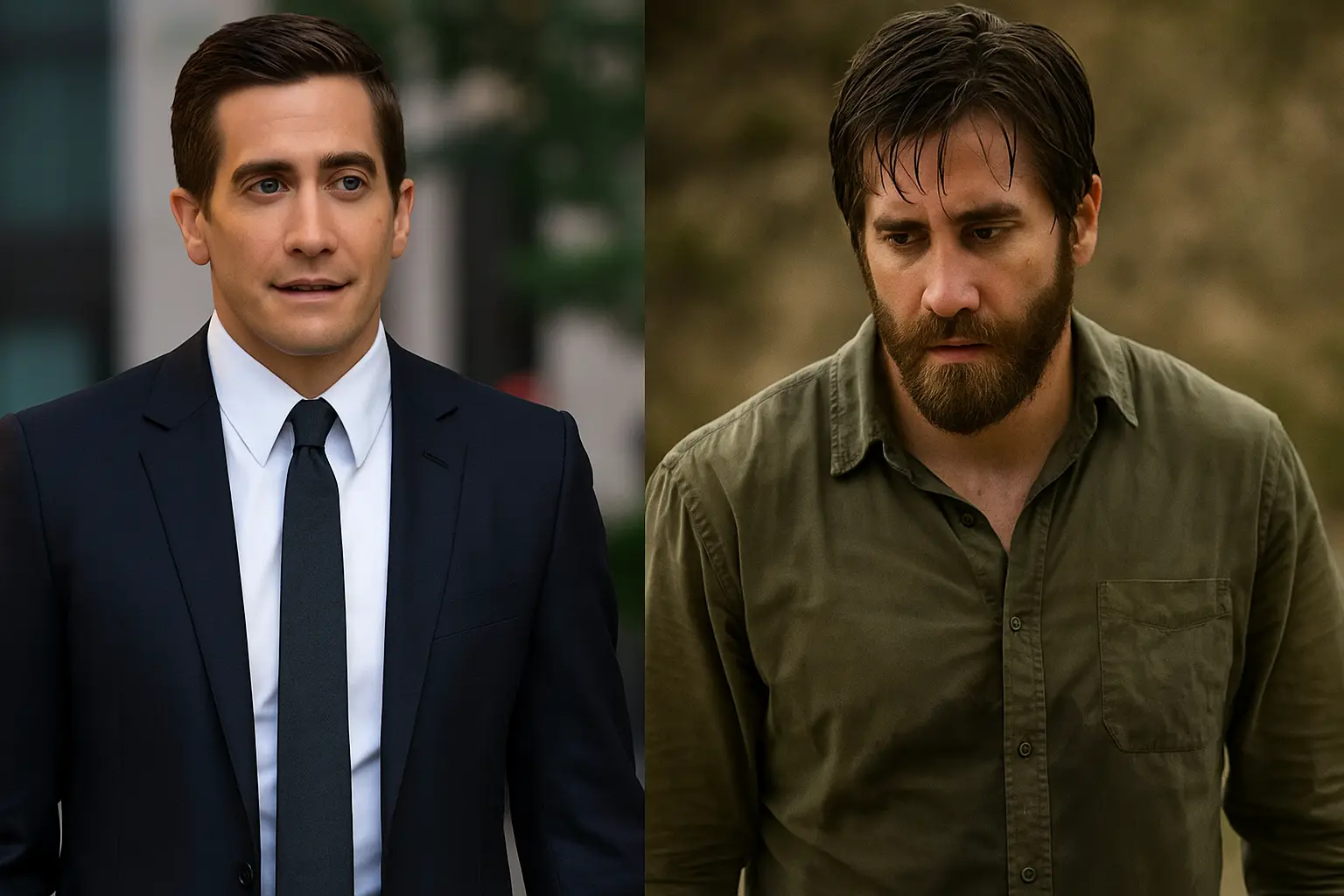
Jake Gyllenhaal has long been one of Hollywood’s most fascinating actors—a performer who manages to bring depth, complexity, and authenticity to every role he takes on. Over the course of more than two decades, he has built a reputation not only for his undeniable talent but also for his daring career choices, which consistently challenge both himself and the audience. Unlike many actors who find comfort in a specific niche, Gyllenhaal thrives in versatility, moving seamlessly from independent dramas to big-budget blockbusters, from psychological thrillers to romantic tales. His ability to embody vastly different characters while maintaining emotional truth is what has made him a Hollywood favorite.
In this blog, we’ll dive deep into Jake Gyllenhaal’s versatility, tracing his journey through pivotal roles, examining how he masters character transformations, and exploring why audiences and critics alike view him as one of the most compelling actors of his generation.
Early Breakthroughs: A Star in the Making
Jake Gyllenhaal was born into a family deeply rooted in the film industry. His father, Stephen Gyllenhaal, is a director, and his mother, Naomi Foner, is an accomplished screenwriter. This environment naturally nurtured his artistic instincts. However, Gyllenhaal’s rise was not handed to him; he earned his place in Hollywood through persistence, careful role selection, and performances that consistently showcased his potential.
His breakout performance came with “October Sky” (1999), where he played Homer Hickam, a small-town boy inspired to build rockets. The film captured his youthful innocence and determination, immediately marking him as a promising young talent. Not long after, Gyllenhaal stunned audiences with “Donnie Darko” (2001), a cult classic that highlighted his ability to dive into complex, psychologically layered roles. His portrayal of the troubled teenager navigating visions of the apocalypse was both haunting and magnetic, signaling that he was not afraid of unconventional material.
These early films established Gyllenhaal as an actor to watch, someone capable of portraying vulnerability, intelligence, and emotional depth all at once.
Taking Bold Risks: A Career Built on Choices
What sets Jake Gyllenhaal apart from many of his peers is his willingness to take risks. Rather than following a predictable path of mainstream romantic comedies or action-heavy blockbusters, he gravitated toward roles that challenged him.
In “Brokeback Mountain” (2005), Gyllenhaal took on the emotionally charged role of Jack Twist, a cowboy engaged in a forbidden romance with Ennis Del Mar (played by Heath Ledger). The film not only broke barriers in Hollywood but also solidified Gyllenhaal’s reputation as a fearless actor unafraid of vulnerability. His performance earned him an Academy Award nomination and critical acclaim, proving he could handle sensitive, groundbreaking material with authenticity and compassion.
A few years later, Gyllenhaal demonstrated his commercial appeal by starring in films like “The Day After Tomorrow” (2004) and “Prince of Persia: The Sands of Time” (2010). While these showcased his ability to lead major studio projects, he never fully settled into the blockbuster mold. Instead, he balanced mainstream roles with smaller, more intimate films that allowed him to flex his dramatic muscles.
The Transformation Era: Losing Himself in Roles
As Gyllenhaal matured as an actor, he became increasingly known for the physical and emotional transformations he underwent for his roles. His method-inspired approach often involves deep immersion into his characters, whether through physical training, emotional exploration, or research.
Nightcrawler (2014):
One of his most transformative performances came with “Nightcrawler,” where he played Lou Bloom, a morally ambiguous crime journalist obsessed with success. Gyllenhaal lost a significant amount of weight to achieve Bloom’s gaunt, unsettling appearance, adding to the character’s eerie presence. His intense stare, unsettling body language, and chilling dialogue delivery made Lou Bloom one of the most memorable antiheroes of modern cinema.
Southpaw (2015):
The following year, he underwent the opposite transformation for “Southpaw,” portraying boxer Billy Hope. Gyllenhaal gained muscle, trained rigorously in boxing, and immersed himself in the mindset of a fighter coping with personal tragedy. The physical transformation was astounding, but what stood out most was the emotional vulnerability he brought to the role, particularly in scenes depicting grief and redemption.
Prisoners (2013) and Enemy (2013):
In Denis Villeneuve’s collaborations with Gyllenhaal, he showcased his ability to balance mystery and intensity. As Detective Loki in “Prisoners,” he created a complex character defined by quiet determination, while in “Enemy,” he brilliantly handled a dual role that blurred the lines between identity and paranoia.
These roles cemented his reputation as an actor who doesn’t just play characters but fully becomes them, often pushing his body and mind to the limits in the process.
Balancing Mainstream and Art House Appeal
Another aspect of Gyllenhaal’s versatility is his ability to appeal to both mainstream audiences and cinephiles who prefer independent films. Few actors manage to balance these two worlds without compromising their artistic integrity, but Gyllenhaal does so effortlessly.
In blockbusters like “Spider-Man: Far From Home” (2019), he played the enigmatic villain Mysterio, bringing charisma and layers of deception to what could have been a one-dimensional role. His performance stood out in the Marvel Cinematic Universe, demonstrating that even within superhero fare, he could elevate the material.
On the flip side, films like “Stronger” (2017) where he played Jeff Bauman, a real-life survivor of the Boston Marathon bombing, reminded audiences of his emotional gravitas. Gyllenhaal brought dignity and humanity to the role, avoiding melodrama while showcasing resilience and vulnerability.
This ability to oscillate between high-profile blockbusters and deeply personal dramas makes him unique in Hollywood and contributes to his lasting popularity.
The Art of Emotional Subtlety
Gyllenhaal is often praised for his expressive eyes and subtle use of body language tools that allow him to communicate layers of emotion without uttering a word. Whether it’s the restrained tension of Detective Loki, the obsessive energy of Lou Bloom, or the fragile hope of Jack Twist, he excels at capturing the unspoken emotions of his characters.
Critics and audiences frequently note his ability to make characters feel real, regardless of how extraordinary their circumstances might be. His performances rarely feel forced or exaggerated; instead, they draw viewers in with quiet authenticity.
Collaborations with Visionary Directors
Part of Gyllenhaal’s success can also be attributed to his collaborations with some of the most innovative directors in modern cinema. He has worked multiple times with Denis Villeneuve, explored psychological thrillers under Dan Gilroy, and stepped into the Marvel universe with Jon Watts. These collaborations have allowed him to experiment with different styles and expand his artistic range.
Each director has tapped into a different facet of Gyllenhaal’s talent, proving that his versatility isn’t just about the roles he takes but also about the ways he adapts to different storytelling visions.
Why Audiences Love Jake Gyllenhaal
So what makes Jake Gyllenhaal a Hollywood favorite? It’s not just his good looks or talent, it’s his fearlessness. He consistently chooses roles that defy expectation, and he commits fully to them. He refuses to be typecast, which means audiences never know exactly what to expect from his next project. That sense of unpredictability keeps his career exciting and his performances fresh.
Moreover, Gyllenhaal brings an emotional honesty to his work. Whether playing a villain, a hero, or someone morally conflicted, he always grounds his characters in authenticity. Viewers see pieces of themselves in his performances, which creates a deeper connection.
Jake Gyllenhaal’s Lasting Legacy
As he continues to evolve, Jake Gyllenhaal is carving out a legacy defined by versatility, dedication, and risk-taking. He represents the best of what modern acting can be: a balance between artistry and commercial appeal, between vulnerability and strength, between subtlety and transformation.
For over two decades, he has consistently proven that he is not just an actor but an artist, capable of turning every role into an unforgettable experience. And as long as he continues to push boundaries, there’s little doubt that Jake Gyllenhaal will remain a Hollywood favorite for years to come.
FAQs
What was Jake Gyllenhaal’s breakout role?
His breakout came with October Sky (1999) and later Donnie Darko (2001), both of which established him as a promising young actor.
Has Jake Gyllenhaal ever won an Academy Award?
While he hasn’t won yet, he earned an Oscar nomination for Brokeback Mountain (2005) and is often praised as one of the most deserving actors without a win.
What makes Jake Gyllenhaal versatile as an actor?
His ability to transition seamlessly between indie films, thrillers, blockbusters, and deeply emotional dramas showcases his adaptability and wide range.
Which directors has Jake Gyllenhaal frequently collaborated with?
He has worked with visionary directors like Denis Villeneuve (Prisoners, Enemy), Dan Gilroy (Nightcrawler), and David Fincher (Zodiac).
How does Jake Gyllenhaal prepare for his roles?
He often uses method-inspired techniques, undergoing physical transformations, immersing himself in research, and committing emotionally to each character.